
 Send Your Inquiry

Gypsum Based Wall Putty: Formula, Additives, and Application Tips
When formulating gypsum based wall putty, it is essential to add certain functional additives tailored to the properties of gypsum based binders—such as alkalinity regulators and water reducers.

Alkalinity Regulators
The main function of alkalinity regulators is to adjust the pH level of the gypsum slurry. This is because certain retarders perform best in mildly alkaline environments.
White cement is commonly used to regulate the alkalinity of the slurry. Alternatively, quicklime or hydrated lime can be used, but for putty applications, calcium hydroxide powder (gray calcium powder) is more convenient.
Water Reducers
The amount of water added during formulation significantly affects the mechanical properties of the final product. More water leads to lower strength. Therefore, to enhance the mechanical performance of the putty—especially when higher standards are required—superplasticizers are used.
Common types include Melamine Superplasticizer (e.g., SMF6010) and modified Polycarboxylate Superplasticizer (e.g., PCE 6020). The typical dosage is 0.2% to 1.0%, achieving a water reduction rate of 20%–25%.
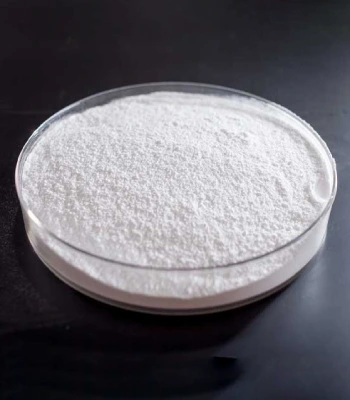
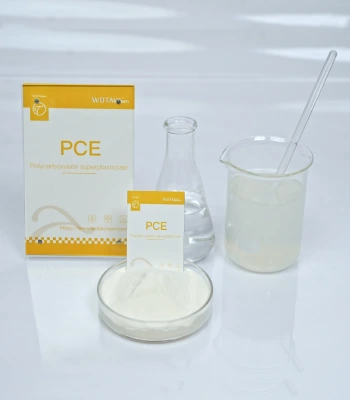
Melamine Superplasticizer – SMF6010 🛒 Polycarboxylate Superplasticizer – PCE 6020 🛒
Formulation and Adjustments
(1) Key Components and Basic Formulation
In gypsum based wall putty, the primary binder is gypsum powder, while fine polyvinyl alcohol (PVA) powder is used for organic modification. You may use standard building gypsum or industrial by-product gypsum such as phosphogypsum or flue gas desulfurized (FGD) gypsum.
The latter can be an effective and sustainable choice with proper research into product performance—and many studies have been conducted in this area in recent years.
Fillers can include heavy calcium carbonate, quartz powder, or talcum powder, typically with a particle size of 200–325 mesh. For thickening and water retention, methyl cellulose ethers (e.g., HPMC, MC with viscosities of 60,000–100,000 mPa·s) or ethyl cellulose ethers (e.g., HEC) can be used.


WOTAIchem™ HPMC 🛒 WOTAIchem™ HEC 🛒
A typical formulation of Gypsum Based wall putty is shown below:
Example of Gypsum Based Wall Putty Formulation
| Raw Material Name | Dosage/Parts by Weight | |
| Formula 1 | Formula 2 | |
| Construction Gypsum Powder | 500 | 650 |
| Heavy Calcium Carbonate | 450 | 350 |
| T5010N Water-Soluble RDP Powder (or Polyvinyl Acetate Powder) | 20-30 | — |
| Composite Retarder | 1.5-3.0 | 2.5-3.0 |
| Sodium Dodecylbenzene Sulfonate | 25-30 | — |
| Sodium Bentonite | 8-15 | — |
| Hydroxyethyl Cellulose | 4.5-6.0 | 5.5-6.5 |
(2) Gypsum Based Wall Putty Formula Review
This Gypsum Based interior wall putty formula is essentially an inorganic-organic composite material, using both types of binders.
▪️Formula 1 is designed as a base layer putty used under coatings.
▪️Formula 2 serves directly as a decorative surface layer putty.
Compared to cement based putty, gypsum based wall putty uses significantly more gypsum powder, as gypsum has lower bonding strength but excellent decorative performance. Beyond providing bonding strength and physical durability, gypsum also enhances breathability, volume stability (non-shrinking), and aesthetic properties.
Typically, gypsum accounts for around 50% by weight in the formulation, and this can be increased up to 85% for higher decorative and mechanical performance. This 50% level is already considered a minimum; reducing it further is not recommended. For surface layer putties, high-whiteness, high-strength gypsum should be used.
Organic Binders
T5010N redispersible polymer powder is a commercial organic binder, typically a mix of polyvinyl alcohol micro-powder (or latex powder), cellulose ether, and starch ether or other adhesives. However, it’s often more effective and flexible to directly use PVA micro-powder and starch ether in combination.
According to WOTAIchem’s experience:
1.5% PVA powder in the formulation yields good performance.
For latex powder (often used in surface layer putty), the dosage should be no less than 2.0%.
Adding starch ether further improves performance.
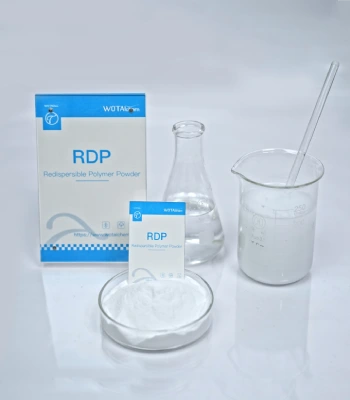

Redispersible Polymer Powder (RDP Powder)🛒 Starch Ether (HPS)🛒
Other Additives
▪️Composite Retarders: Work in synergy with gypsum and can be purchased as ready-mixed products or self-formulated.
▪️Sodium dodecylbenzene sulfonate: Acts as a dispersant to reduce water demand.
▪️Sodium hexametaphosphate: Offers both dispersing and retarding effects.
As mentioned earlier:
▪️Sodium-based bentonite is an inorganic thickener that enhances thixotropy and application smoothness.
▪️Hydroxyethyl cellulose (HEC) is crucial for water retention. Despite its higher price, insufficient use can lead to rapid drying—especially problematic in dry spring and summer conditions.
(3) Gypsum Based Wall Putty Formula Adjustments
Due to variations in gypsum powder and additives, adjustments may be required based on raw material properties or specific performance requirements. Adjustments include:
▪️Changing the gypsum or binder dosage to meet strength needs;
▪️Modifying retarder dosage or type to adjust setting time;
▪️Tweaking the amount of HEC for desired application performance.
Additionally, foam may appear during application, and since the base formula does not include a defoamer, a defoamer can be added if necessary.
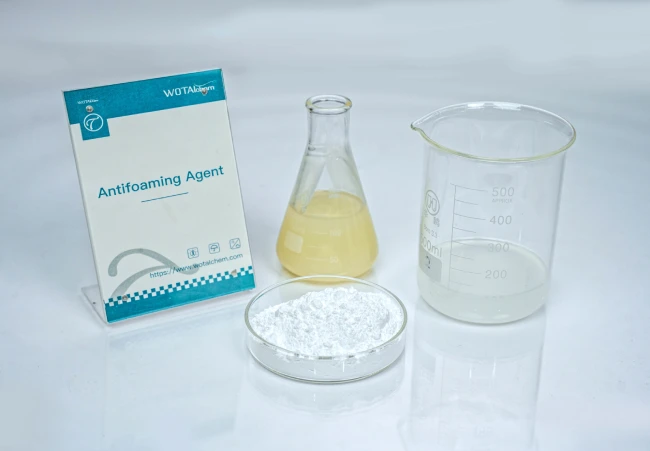
Yuanwang™ Antifoaming Agent/Defoamer🛒

Posted by Isabel leave words
Hi, I've been in this industry for five years. I hope you enjoyed my blog. Welcome to leave a comment down below.
Leave a Reply