
 Send Your Inquiry
Wall Putty VS White Cement: What’s the Best Choice for Your Project?
When it comes to decoration and repairs, wall putty and white cement are typically the most popular choices.
Both of these materials make a great contribution to the construction, but contrary to popular belief, they’re not completely the same!
This article compares wall putty vs white cement. It will help you choose the best option for your needs.
 VS
VS 
Things You Should Know
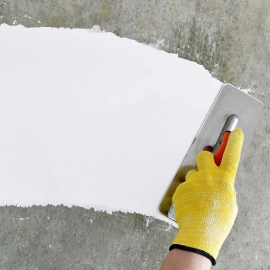
Wall putty is a thick, paste-like substance used to prepare surfaces before painting. It helps fill in any holes, cracks, or rough spots on the walls, making them smooth and even. This creates a better base for spray paint or decorative finishes, ensuring that the final paint job looks neat and professional.
White cement, officially known as white Portland cement, is a type of hydraulic binding material made from white Portland cement clinker mixed with gypsum and finely ground. It is mostly used for decorative purposes, such as filling up white porcelain tile seams.
Wall Putty vs White Cement – Similarities
Their shared goal of providing a solid, smooth, and durable foundation makes them functionally similar in certain aspects of wall finishing.
1. Surface Smoothing: Both wall putty and white cement are used to create smooth surfaces. They provide a fine finish that can be painted or decorated over, ensuring that walls are even and free of imperfections.
2. Aesthetic Improvement: Both materials improve the aesthetics of the surface. Whether it’s wall putty used before painting or white cement applied as a final layer, they both contribute to enhancing the appearance of the wall by giving it a clean, refined look.
3. Chemical Additives: Wall putty and white cement both require chemical additives during their production. These additives enhance performance characteristics such as bonding strength, drying time, and overall durability, making them more efficient for construction purposes. You can refer to the below table for details.
Chemical Additive Types | Function | Representative Products |
| Water Retaining Agent | 1. High water retention 2. Extended opening time for the wall putty and white cement | Cellulose ether (HPMC, HEMC, and HEC) |
| Water Reducers | 1. Reduce the water content while maintaining workability 2. Enhancing the strength and durability of the wall putty and white cement | |
|
| 1. Control the formation of foam during the mixing process. 2. Help in achieving a uniform texture, which is crucial for a quality paint finish | · Fatty alcohol defoamer · Mineral oil defoamer · Polyether defoamer · Inorganic silicon polyether defoamer · Organic silicone defoamer |
| Accelerators | 1. Speed up the setting process in cold weather or when fast results are needed 2. Strength accelerator |
*Note: The need for these additives depends on the conditions and specific requirements of the project. If you are hesitant about which additive to choose, WOTAIchem can help you select the appropriate additives for wall putty and white cement based on your specific needs. Click here to learn more.
Wall Putty vs White Cement – Differences
1. Differences in main components
White cement is a type of cement to which limestone is added during grinding at no more than 5% of the weight of the cement. White cement is mainly composed of minerals such as calcium carbonate.
| White Cement Compositions | Common Substance | Characteristics |
|
Minerals |
Calcium carbonate | Due to the main component of white cement being minerals like calcium carbonate, which is a basic salt, white cement reacts with acids through a neutralization reaction, causing it to weather over time.
Once white cement has dried, it becomes very hard, but as it reaches a certain hardness, it may crack on its own.
This is one of the reasons why many walls develop cracks. |
Wall putty is generally composed of base material, filler, additives, and solvents.
| Wall Putty Compositions | Common Substance | Characteristics |
| Base material | Cement or organic polymers, such as acrylate polymers, act as a binder |
Wall putty contains a significant amount of acrylic polymer, which helps it avoid the issues associated with white cement which is primarily composed of strong alkaline salts.
This makes it less susceptible to erosion and weathering from acidic substances, allowing it to be used effectively for exterior walls.
Wall putty demonstrates superior resistance to alkalinity, cracking, and powdering compared to white cement. |
| Fillers | Talcum powder, calcium carbonate, quartz sand, etc. Mainly used for filling | |
| Additives | Thickeners and water retention agents. Play a role in water retention, modification, and other effects. | |
| Solvents | Water-based. Facilitate access and improve environmental performance |
2. Difference in use
 VS
VS 
|
Wall Putty | Wall putty is an essential product before paint spray or art paint, generally for the bottom. It is applied on finished surfaces to prepare walls for painting.
It is usually divided into two types – interior walls and exterior walls. It is for environmental protection and safety. It also resists glare and acid and alkali erosion. |
|
White Cement | White cement is mainly for decorative construction work. It is usually applied on raw surfaces to create a strong, smooth base for construction.
It is for painting, sculpture, flooring, staircases, and column steps. It is also for making colored water-sandstone and terrazzo products. By adding a suitable, mutation-resistant pigment to the white cement, we can make colorful cement. |
3. Differences in construction effect
 VS
VS 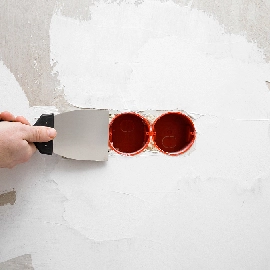
| Material | Finish Quality | Purpose and Strength |
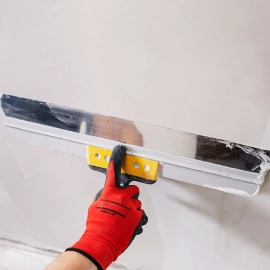
| Wall Putty | Wall putty provides a smoother and finer finish than white cement. It is designed specifically for filling imperfections on walls, offering a highly polished surface ideal for painting. | Wall putty is primarily used for aesthetic finishing and surface preparation before painting. |
| White Cement | White cement, while smooth, is more suitable for creating a robust base layer rather than a fine, decorative surface. | White cement is stronger and more durable than wall putty, making it ideal for structural purposes, such as plastering or base layers in construction. |
4. Difference in waterproofing
 VS
VS 
Wall Putty: Although some types of wall putty have added water-repellent properties (especially exterior-grade putty), it is generally less water-resistant than white cement. Wall putty is typically used indoors or on surfaces that will be painted over to provide extra protection. However, you can overcome this shortcoming by adding a waterproofing agent.
White Cement: Naturally more water-resistant because it is a cement-based material. When fully cured, it forms a strong, durable surface that resists moisture penetration, making it suitable for exterior applications or areas exposed to moisture.
In summary, white cement is the better option for waterproofing, especially in areas with high moisture exposure.
5. Wall Putty vs White Cement – Method of Application:
 VS
VS 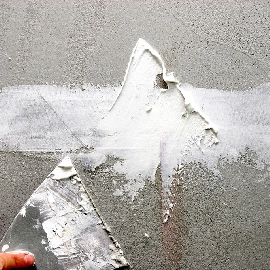
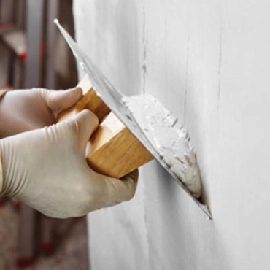
Wall putty: It is usually spread over the surface in a thick layer via a putty knife.
White cement: It is usually spread over the surface in a thin layer with a trowel or a sprayer.
6. Wall Putty vs White Cement – Cost
Wall putty: It is designed for interior applications and is a cost-effective solution for leveling and preparing walls before painting. It is more cost-effective.
White cement: Higher cost due to its purity, production process, and application quality.
7. Wall Putty vs White Cement – Characteristic
Wall putty is easy to apply and dries quickly.
White cement requires more time and effort to apply.
Summary
In conclusion, the comparison between wall putty vs white cement shows that wall putty is best for achieving a smooth, paint-ready surface, while white cement is better suited for providing strength and durability. Both materials are essential but serve different functions in construction and surface preparation.
WOTAIchem suggests the choice of white cement or wall putty depends on the specific requirements of the project. If you are looking for a smoother finish and want to fill cracks or imperfections, wall putty is an appropriate choice. It provides a solid base for painting and enhances the overall aesthetic of the wall. On the other hand, white cement is preferred when a bright white finish is required, such as for decorative purposes or to create a base for light-colored paints.

Posted by Isabel leave words
Hi, I've been in this industry for five years. I hope you enjoyed my blog. Welcome to leave a comment down below.
Leave a Reply