
 Send Your Inquiry

FAQs - HPMC & HEMC
HPMC has the effect of thickening, water retention, PH stability, excellent film formation, sag resistance, enzyme resistance, dispersion, and cohesion.
HPMC is a non-ionic cellulose, the original raw material is a natural polymer going through chemical processing. It’s the perfect choice for high-quality construction materials additives. Generally, it’s in use for interior and exterior wall putty, dry mix mortar, adhesives, coatings, and self-leveling agents.
Avoid direct sunlight, keep it away from air radiator, water or steam pipes.
HPMC on wall putty based on the stated amount and proportion provided, you may use it as normal, or adjust it due to your standard practice.
According to the provided formula, add 1-2 parts of HPMC into 50-100 parts of absolute ethyl alcohol, stir it and make HPMC fully dissolved, after that slowly add 5-10 parts of water, continue stirring, and leave it for 10-30 minutes, then you get a transparent, gelling texture of HPMC liquid.
The general ratio for adding HPMC to achieve desired viscosity in hand soap or dish detergent is between 0.1% to 1% by weight. However, the exact ratio may vary depending on the product’s specific formulation.
For more precise recommendations, WOTAI has experts who can customize a formula based on specific product requirements. Please feel free to consult us for further assistance.
Pharmaceutical-grade HPMC has higher purity and fewer impurities than general HPMC products.
FAQs - Orders and Delivery Related
The lead time is 7 to 30 days normally, but due to covid-19 pandemic, the delivery may be delayed, but we will ship out as soon as possible once we have the green light.
The packaging dimensions for cellulose ether are 43 cm x 15 cm x 85 cm, while the packaging dimensions for RDP powder are 54 cm x 14 cm x 65 cm for a 500 kg bag.
The pallet dimensions are 110 cm x 110 cm x 120 cm.
We support 30% TT plus 70% payment before delivery.
Once the order is placed, we immediately send you a sales contract and a PI for confirmation.
After we received your 30% advance payment, it will take about 5-7 working days to manufacturing/stocking the products. At the same time, we will book the voyage for your shipping.
We will send you the stocking videos after the stock is ready. At this point, we’ll collect the balance from you.
Once payment is confirmed, we will share the loading pictures and shipping details. For example, the BL NO., container number, and your consignment details.
Within 7 days of the BL date, we will share the BL invoice, certificate of origin, pack list, or other documents via DHL/Fedex as per your request.
If you wish to pack goods in a container without using pallets to save costs, we recommend using our 3-layer waterproof packaging bags to ensure the quality of your goods. However, please note that loading and unloading goods can be more challenging.
Without pallets, there is no waterproof film, which may result in moisture damage.
Additionally, sealed bags of powder may leak during transport. Also, we must consider the weight limit imposed by the shipping company.
- A small container has a weight limit of 20 tons, while a high cube container has a weight limit of 28 tons.
- Within the weight limit, a small container can hold 14 tons of HPMC (14198kgs gross weight, 560 bags)
- A high cube container can hold 27 tons of HPMC (net weight 27380kgs, 1080 bags).
We will dry the container before shipment to ensure the quality of the goods. Moreover, we also provide complimentary marine insurance at the same time.
FAQs - After Purchase Questions
Quality is the basic foundation and crucial factor to our business, we only provide premium quality at a reasonable price. Our QA inspector is stationed in our factory and they check every link from sourcing to production.
Not at the moment, but we will provide more categories in the future.
Each bottle contains 200 grams, we offer 200-600 grams depend on your needs.
Polypropylene fibers mainly include two categories: microfibers and macro fibers. We manufacture and supply macro fibers only.
FAQs - General Questions
Yuanwang Imp&Exp Co., Ltd is a state-owned organization supported by the Chinese government.
WOTAI chemical belongs to the YuanWang group. It’s a construction additives brand focusing on quality and effective solutions. Our products are being used in building materials, such as wall putty, tile adhesive, EIFS/ETICS, self-leveling, gypsum plasters, etc.
The production process in China differs from that of Europe, America, and other regions. Our cellulose ether is made from refined cotton, while Europe and America mainly use wood pulp. However, the quality of our product is not compromised, and it still performs exceptionally well.
If you have further questions about HEC, please feel free to contact us, and we welcome your sample testing at any time.
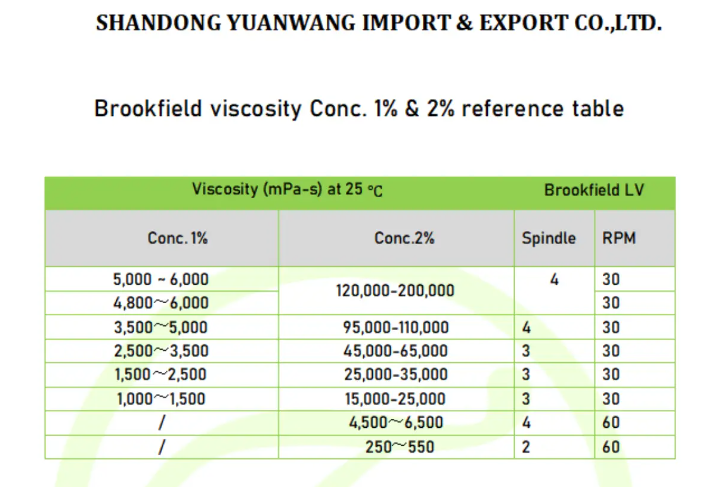
Yes, compared with other brands, our product viscosity is slightly higher. Our intention is to help you reduce the amount so that to cut costs.
To facilitate the comparison of different parameters, we have summarized the numerical comparisons in a table for your reference based on your specific usage requirements. Please send an inquiry to discuss the corresponding product parameter and conversion.
FAQs - Product Applications
Absolutely. Our RD experts have assisted numerous customers in creating new formulations to enhance their previous ones. The tile adhesive formula consists of HPMC, RDP, and HPS. For accurate dosage information and any other concerns, please email us at [email protected]. We will be happy to assist you.
We recommend adding 1 kilogram of calcium formate for every ton of dry tile adhesive powder at room temperature. When the temperature is below 5°C (41°F), we suggest increasing the amount to 2-3 kilograms. You may further increase as the temperature continue to drop. However, the specific recipe may vary depending on your actual situation.
*Please note that this is a general guideline, and it is always recommended to consult with a WOTAI professional. Contact us today for free samples. We will help you analyze and determine the best possible solutions!
Calcium formate acts as an accelerator in cement, influencing both the setting and hardening time by accelerating the formation of tricalcium aluminate silicate. Depending on the dosage, calcium formate can significantly modify the initial workability of the wet mortar.
Cellulose, on the other hand, functions as a water-retaining and thickening agent. It can extend the open time of the mortar. However, it does not simply make the mortar “dry slowly.” The primary role of cellulose ethers is to provide sufficient water retention for plastering. This allows the cement to solidify and develop strength before drying. The dissolved cellulose ethers in the mortar matrix largely determine its rheological properties, which, in turn, affect the workability of rendering.
- HPMC: 0.2%
- PCE: 0.2%
- PP Fiber: 0.1%
FAQs - Concrete Fibers
Polypropylene fiber (PPF), polyvinyl alcohol fiber (PVA), and PP Macro Fiber are not limited to certain scenarios. However, here are some common uses:
Single-filament for exterior walls. PPF, PVA, and coarse fibers can be used in exterior wall systems to enhance strength and flexibility.
Structural mesh filament. Fibers, including PPF and PVA, can be used as reinforcement materials within concrete structures. They improve crack resistance and durability.
Coarse fiber, such as PP Macro Fiber, applies to various projects requiring high strength and durability.
One significant application of steel fiber is in industrial flooring. And there are two major manufacturers located in China. The length of their steel fibers typically ranges from 65-70 mm, which is larger than steel needles. The steel fibers are arranged and bonded using adhesive to form continuous rows. This arrangement helps reduce the volume ratio, saving transportation costs and facilitating dispersion.
Imitation steel fiber (PPTF) is a recommended alternative for structural buildings.
Adding polypropylene fibers(PPF) in concrete has a strict process.
Normally, the mixing time needs to be extended when adding fibers to concrete. After adding the fibers, the mixing time should be extended by 10 to 20 seconds.
There are also specific requirements for the sequence of adding materials. First, add aggregates (stone or sand), then add the fibers, and finally, add more aggregates. This sequence helps prevent the fibers from being added to the surface.
A dry mixing process should also be conducted for 10 to 20 seconds before proceeding with wet mixing.
FAQs - Superplasticizers
WOTAIchem’s high-quality superplasticizers are also known as water reducers. It does not affect the initial setting time of cement. Our superplasticizers are designed to enhance the flowability of concrete. It is crucial to consider the setting time during construction, ensuring that the initial setting time is not excessively short nor the final setting time unnecessarily long.
The initial setting time for Portland cement should not be earlier than 45 minutes. And the final setting time should not be later than 390 minutes. Similarly, the initial setting time for ordinary cement should not be earlier than 45 minutes. And the final setting time should not be later than 600 minutes. If the cement’s setting time deviates from these specifications, it may be considered unsuitable for use.