


VAE RDP
In Tile Adhesive>>
RDP, AKA redispersible polymer powder, made of VAE emulsions.
Redispersible polymer powder is commonly added to tile adhesive for extra bonding strength. Especially for large-size tiles or tilling on walls, if tile adhesive lacks adhesion, the tiles will drop. RDP plays a significant role in the tilling process. On top of bonding, RDP powder also makes the mortar easy to handle, saving you time and effort.
At WOTAIchem, we manufactured different grades of RDP powder for the construction industry. Let us know your special requirements; we will adjust the formula to make it best suited for your current application!
RDP Grades
Product Name: Redispersible polymer powder or RDP.
Appearance: White or off-white powder.
pH Value: 6-8.
Polymer Type: Vinyl-acete-ethylene copolymer emulsion.
TG: -8-15℃. Support OEM based on your requirements.
Recommend Models: T-5023N, T-5043N, T-5045N,T-5047N.
Application: C1 tile adhesives, C2 tile adhesives, and more.
MOQ: 1000 kg.


Request for Free Sample
Experience the superior bonding and flexibility of our RDP for tile adhesive. Our redispersible polymer powder enhances the performance and durability of your tile installations.
Contact us now to receive a FREE sample! Discover how our high-quality RDP can improve your projects.
Maximizing Tile Adhesive Performance with RDP

Horizontal Tiling
VAE RDP powder serves as a natural binder in tile adhesives. It creates a strong film on different surfaces, boosting the mortar’s bonding ability.
Strength and Durability
RDP polymer makes tile adhesives more compact and resistant to wear. The polymer film provides durable and long-lasting resistance even under external pressure and impact.


Cold Weather Tiling
The flexible nature of VAE RDP powder helps the mortar withstand temperature changes. This prevents cracking caused by temperature changes.
Reduce Water Absorption
VAE RDP powder creates a protective film on the mortar and its surface. This film doesn’t break apart when it meets water. It stops water from getting in and makes the mortar waterproof.


Easy Mortar Construction
RDP polymer acts as a lubricant, allowing mortar components to flow smoothly. Additionally, the powder induces air, making the mortar more compressible and easy to apply.
Recommended Dosage of RDP for Tile Adhesives
General RDP Dosage: 10-30 kg/ton.
RDP powder plays a crucial role in tile adhesive mortar formulations. Its dosage depends on various factors. That may include the type of tile adhesive application, construction environment, etc.
For tile adhesives with strict flexibility requirements, such as C2S2 grade tile adhesives, the dosage may reach 40-50 kg/ton. The specific dosage should be adjusted based on the particular formulation and application. You can also contact our team for more professional formula help.
Product Handling and Safety
- Packaging
- Storage
- Safety Notes
Multiply paper bag.
Net weight per package: 25kg.
*Customizable design based on requirements.
Store in a cold and dry place below 40°C.
Avoid exposure to humidity, direct sunlight, and pressure.
Being thermoplastic, the storage time should not exceed six months.
In case of contact with eyes, rinse with plenty of water immediately.
Seek medical advice promptly if there is an allergic reaction.
Your Professional VAE RDP Powder Supplier
 Modified Solution
Adding a small amount of RDP powder to tile adhesive mortar affects the bonding strength and performance. The result depends on the percentage of RDP polymer added.
 Versatile Applications
RDP powder finds primary applications in building materials such as gypsum, cement, and mortar. With its unique properties: water resistance, crack resistance, and powerful adhesion.
 Efficient Production
We operate our own VAE RDP powder factory, boasting an annual production capacity of 30,000MT. Whether you require large or small order volumes, we’re ready to meet your needs.

Other Applications of VAE RDP
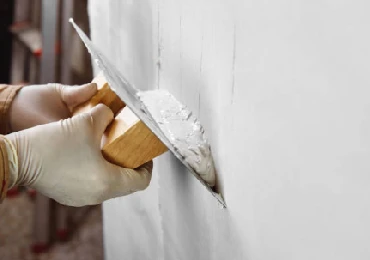
> Wall Putty. Make your wall putty durable! Our VAE RDP improves how well it sticks, makes it easier to work with, and ensures a crack-resistant finish.
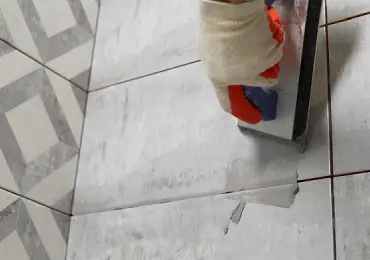
> Self-Leveling Compounds. Better floors with RDP! It helps the compound flow better, prevents it from separating, and makes it stronger.
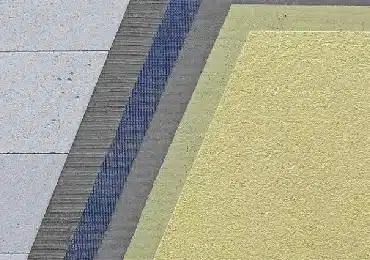
> EIFS/Wall Insulation System. Protect your walls! RDP gives flexibility and makes things stick, shielding against tough weather and making your structure last longer.
Become a Dealer
You are given the advanced solution and technology to succeed. We make sure you have all the assistance you require as our dealers.



FAQs
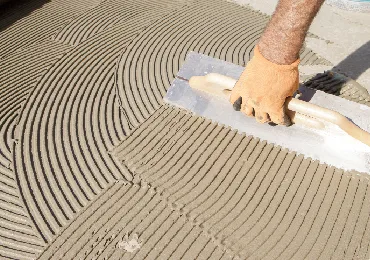
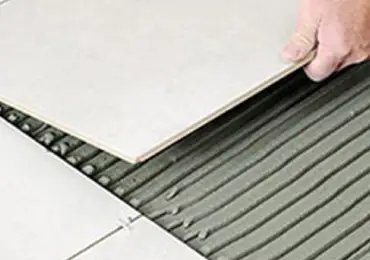
The most commonly used method currently is the thin-layer method. The tile adhesive is pre-scraped onto the surface of the substrate using a toothed spatula.
In order to form a raised stripe and a uniform layer of mortar. The tiles are then pressed and twisted slightly to a thickness of approximately 2 to 4 mm.
Because of the modifying effect of cellulose ethers and RDP powders, the tile adhesive has good bonding properties to different types of substrates, and to surfaces such as whole glass tiles, which have a shallow water absorption rate.
It is flexible enough to absorb stresses caused by temperature differences. It has excellent resistance to sagging and a long enough opening time for thin layers, which is considerably faster and easier to work with. There is no need to pre-wet the tiles in water. This method is simple to use and easy to control the quality of work on site.
The cement content primarily influences the tensile bond strength of tile adhesive after immersion in water. When the cement content is low, the water resistance decreases. But, excessively high cement content can lead to a dense surface of the tile adhesive. That may not be conducive to mechanical anchoring with the tiles.
Redispersible polymer powder forms a film upon emulsification and swells upon contact with water. Thus, it is necessary to increase the powder content to ensure the same bonding effect. Certain additives help maintain a cement content of no less than 35% and no more than 40%. And the RDP powder content is preferably higher than 2%.
Different requirements for tensile bond strength may necessitate specific formulation adjustments. For further inquiries about formulations, please feel free to contact us for more discussion.
Tile adhesive is generally stronger and more flexible than cement for securing tiles. It provides better bonding, reducing the risk of tiles cracking or coming loose. Unlike cement, tile adhesive is specifically formulated to adhere tiles to various surfaces. This feature ensures a more durable and long-lasting installation.
Redispersible polymer powder, or VAE-RDP Vinyl acetate-co-ethylene copolymers RDP. RDP powders are obtained from spray-drying treatment of optimized latex dispersion, latex dispersion consists of polymeric particles which are dispersible in water. When adding RDP powders to mortars increases cohesion, bond strength, and flexibility.
WOTAI RDP powder is a popular additive for tile adhesive, exterior wall putty, wall insulation mortar, floor-filling compositions, and water-proof mortar. When adding RDP powders to mortars strongly increases cohesion, bond strength, and flexibility.
 Contact Us