


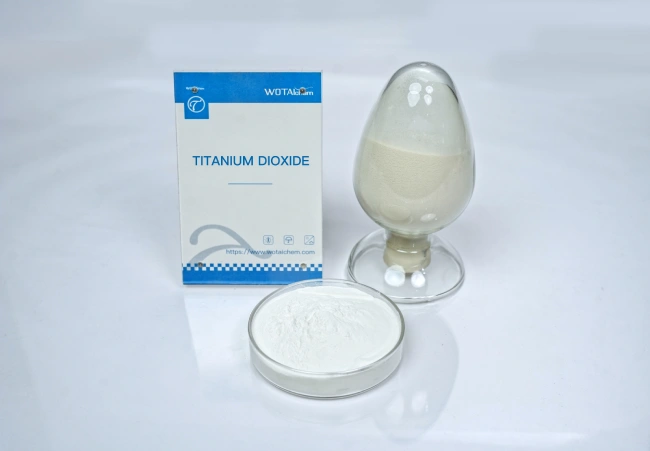


Titanium Dioxide Pigments Manufacturer
Relying on the advantages of titanium minerals, Yuanwang has been the leading manufacturer of titanium dioxide pigment in China.
Our company has advanced titanium dioxide pigment production equipment and manufacturing processes. We use the sulfate and chloride processes to make high-performance white pigments in various grades and models.
These pigments are widely used in products such as paints, plastics, and inks. Please read below to learn more about us.
Titanium Dioxide Pigments Manufacturer - Yuwang Company
Yuanwang, located in the beautiful Spring City of Jinan, Shandong, China. We are a leading titanium dioxide pigment manufacturer in China, specializing in producing various types. Our best-selling products are rutile and anatase titanium dioxide pigments.
We have advanced R&D facilities and strictly adhere to ISO 9001 quality standards. Our production processes include both the chloride and sulfate methods, ensuring high-quality results for diverse applications.
Titanium Dioxide Pigment

What is titanium dioxide pigment?
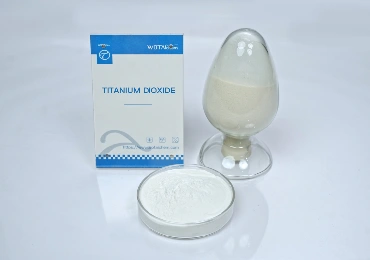
Titanium dioxide is a key inorganic pigment. Its formula is TiO₂. The titanium dioxide pigment color is white. It appears as a solid or powder. It is non-toxic, opaque, and exceptionally white and bright.
Yuanwang’s titanium dioxide pigments are of two grades: general purpose and pigment.
| Category | Applications | Characteristics |
| General-purpose | Coatings, inks, plastics, rubber, paper industry | High whiteness and brightness |
| Pigment-grade | Enamels, welding rods, ceramics, electronics, metallurgy | High purity: Required for industries with specific purity requirements. |
Rutile Titanium Dioxide Pigment
Rutile titanium dioxide pigment is a kind of titanium dioxide that has higher performance. It is ideal for applications in paint, coatings, paper, and rubber industries.
Yuanwang’s rutile titanium dioxide pigment has the following highlights.
>> High opacity: It provides excellent coverage with thinner coats, reducing paint usage and costs.
>> Strong adhesion: Ensures the paint bonds closely to the substrate, enhancing its durability.
>> Weather and chemical stability: It prevents paint from discoloring, chalking, and peeling. This extends the paint’s lifespan.
>> Water resistance: Maintains coating performance in humid environments, prolonging the coating’s durability.

Product Details
As a titanium dioxide pigment manufacturing facility, Yuanwang has 10 series of products. They suit applications in ink, plastics, paints, and coatings. You can refer to the table below for a specific model.
 YW-TiKON 33
TiO2 content 94% Surface treatment Alumina, zirconia, organic Oil absorption 21g/100g pH 7.5 Specific gravity 4.1 Bulk density 0.92 kg/l or 58 lbs/cu.ft. Light scatter – calculated mean (OD) 0.27 µm - YW-R-5566
TiO2 content 93% min Rutile content 97% min Inorganic surface treatment Alumina, Zirconia Organic treatment Yes Particle size 0.3μ m Density 4.0 Oil absorption 18-23 pH 6.5~8.5 TiO2 content ≥94 Brightness ≥97.5 Oil absorption g/100g ≤19.5 PH (aqueous suspension) 6.5-8.5 Tinting strength ≥110 Rutile content ≥97.5 Oil dispersion (Hegman) ≥6.0 Residue on sieve ≤0.02 Resistivity ≥60 TiO2 content ≥93 Brightness ≥97.5 Oil absorption g/100g ≤22 PH (aqueous suspension)
6.5-8.5 Tinting strength ≥110 Rutile content ≥97.5 Oil dispersion (Hegman)
≥6.0 Residue on sieve ≤0.02 Resistivity ≥60 TiO2 content ≥93 Brightness ≥97.5 Oil absorption g/100g – PH (aqueous suspension) 6.5-8.5 Tinting strength ≥106-110 Rutile content ≥97.5 Oil dispersion (Hegman) ≥6.0 Residue on sieve ≤0.02 Resistivity – - YWR6658-Plastic Grade
TiO2 content ≥97 Brightness ≥97.5 Oil absorption g/100g ≤15.5 PH (aqueous suspension) – Tinting strength ≥116 Rutile content ≥97.5 Oil dispersion (Hegman)
≥6.5 Residue on sieve ≤0.02 Volatile at 105℃ ≤0.25 - YWR6600-Papermaking
TiO2 content ≥98 Brightness ≥97 Oil absorption g/100g – PH (aqueous suspension) – Tinting strength ≥115 Rutile content ≥97.5 Oil dispersion (Hegman) – Residue on sieve – Resistivity – - YWR6668-Ink Grade
TiO2 content ≥94 Brightness ≥97.5 Oil absorption g/100g ≤19.5 PH (aqueous suspension) 6.5-8.5 Tinting strength ≥110 Rutile content ≥97.5 Oil dispersion (Hegman) ≥6.0 Residue on sieve ≤0.02 Resistivity ≥60 - YWRJHA110-Fiber Grade
TiO2 content ≥98.5 Oil absorption g/100g ≤26 PH (aqueous suspension)
6.5-8.0 Tinting strength ≥95 Water solubility ≤0.5 Oil dispersion (Hegman) ≥6.0 Residue on sieve ≤0.1 Volatile at 105℃ ≤0.5
Your One-Stop Solution for TiO₂

Ensure a strong supply chain.

Full-chain support with ample product inventory to meet large volume demands.

Eliminate intermediaries and offer competitive pricing.

Pricing discounts tailored to varying order volumes.
Titanium Dioxide Pigment Manufacturing Process
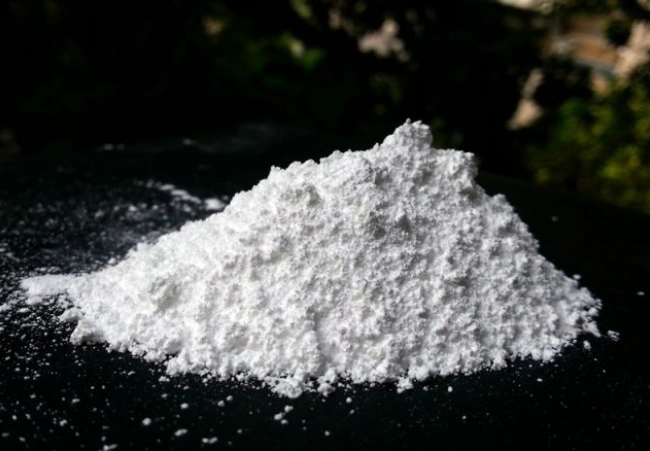
Chlorination Stage:
High-purity coke is mixed with titanium ore. It then reacts with chlorine gas at high temperatures to produce titanium tetrachloride. Impurities are removed through chemical treatment, resulting in purified titanium tetrachloride.
Oxidation Stage: The purified titanium tetrachloride is oxidized with oxygen. After dechlorination, titanium dioxide is obtained.
Post-Processing Stage: The raw titanium dioxide is dechlorinated, surface-treated, and milled. This produces the final powder.
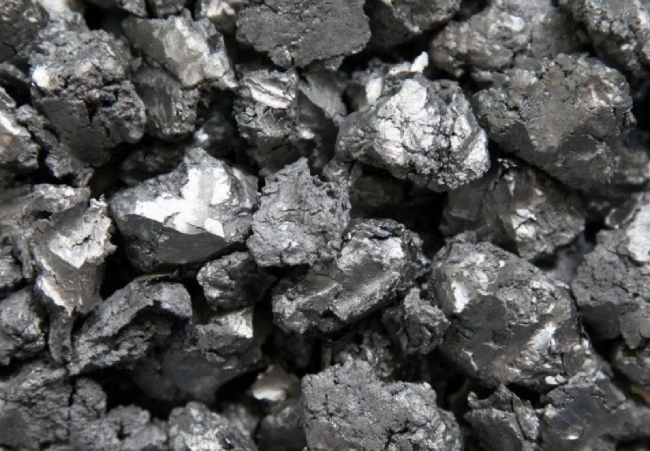
Raw Material Preparation: Select suitable titanium dioxide ore. Then, crush and grind it to a desired powder size.
Pre-Treatment: Wash, soak, and precipitate the powdered raw material.
Sulfuric Acid Decomposition: The pre-treated raw material reacts with sulfuric acid. This produces a titanium ion solution.
Hydrolysis and Calcination: A precursor for titanium dioxide forms from hydrolysis and dehydration. Then, it is calcined at high temperatures to make the final powder.
Titanium Dioxide Pigment Uses
 Titanium Dioxide Concrete Pigment
Titanium Dioxide can be added to building materials such as concrete to improve their weathering and durability.
 Titanium Dioxide Paint Pigment
Excellent hiding power & weathering resistance. It enhances the lightfastness, weatherability, and adhesion.
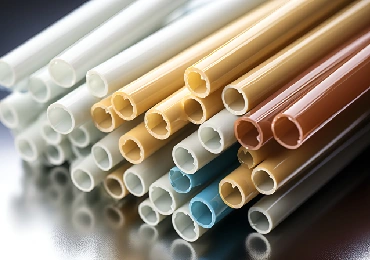 For Plastic Industry
It can improve the heat, light, and weather resistance of plastics. It can also enhance their mechanical and electrical properties.
 For Paper Industry
Titanium dioxide is used as a filler in the paper industry. It increases the whiteness and strength of the paper. It also improves its gloss and print quality.
Related Products






FAQ
Have any questions? We are always here to help you.
Titanium dioxide pigment (TiO₂) is a type of semiconductor material. When it’s exposed to ultraviolet (UV) light, it gets energized and creates pairs of tiny charged particles called electrons (e⁻) and holes (h⁺).
These particles react with water and oxygen in the air to produce powerful oxidizing agents like hydroxyl radicals (·OH) and superoxide anions (O₂⁻).
These active substances can break down harmful pollutants in the air, such as organic compounds, nitrogen oxides (NOx), and sulfur compounds (like H₂S). They can even kill bacteria and viruses, helping to purify the air.
It is safe for normal use.
Titanium dioxide is an inorganic compound with the formula TiO2. It is non-toxic, opaque, and has the best whiteness and brightness. It is the best-performing white pigment in the world today. It is widely used in paint, plastic, paper, ink, chemicals, rubber, and cosmetics.
Titanium dioxide is a colorant and sunscreen in cosmetics. It is usually considered safe. However, high doses may cause chronic toxicity. Caution is needed, especially with food additives. Nanoscale titanium dioxide may irritate the lungs if inhaled in high concentrations. It may also cause allergic skin reactions in some cases.
Titanium dioxide pigment (TiO₂) is an important inorganic pigment. It is widely used in coatings, plastics, paper, ink, chemical fiber, rubber, and cosmetics.
Coatings: It is mainly used in architectural, automobile, marine, and furniture paints. It improves the covering power and brightness of paints. It also boosts their weather resistance and durability. Plus, it prevents fading and aging from ultraviolet rays.
Plastics: It is used in plastics as a colorant and filler. It improves their heat, light, and weather resistance. It also prevents UV-induced aging. It is widely used in many plastic products, like food packaging and appliance shells.
Paper-making: In making paper, titanium dioxide pigment powder is used as a pigment and filler. It boosts the paper’s whiteness, gloss, and opacity. It also improves its quality and appearance. It is commonly used in the production of high-grade paper and cardboard.
Ink: It is used in ink to boost its brightness and hiding power. This is vital for high-quality image printing. It can provide a better printing effect and light resistance.
Chemical fiber: In making chemical fibers, titanium dioxide pigments are used as a matting agent. It improves the luster and appearance of the fibers. It is commonly used in making synthetic fibers.
Rubber: In rubber products, it can improve durability and aging resistance. It can prolong their service life.
Cosmetics: It is mainly used as a sunscreen and whitening agent. It blocks ultraviolet rays, protecting the skin. It also boosts the stability and gloss of cosmetics.
 Contact Us