
 Send Your Inquiry
Tile Adhesive Composition Explained: What Makes It Stick?
Tile adhesive, also known as tile glue, is a construction material used to bond ceramic tiles, porcelain tiles, floor tiles, and similar materials to surfaces. It is widely used for wall and floor finishes in kitchens, bathrooms, living rooms, and exterior spaces.
The quality and performance of tile adhesive directly affect the strength and durability of tile installation. In this article, we will explain the tile adhesive composition to help you better understand this essential building material.
Tile Adhesive Chemical Composition
Tile adhesive typically consists of cement, quartz sand, modified polymer emulsion or redispersible powder, and various additives and auxiliaries. These components are mixed in specific ratios to form the base of the adhesive.
1. Cement
The structural backbone in tile adhesive composition
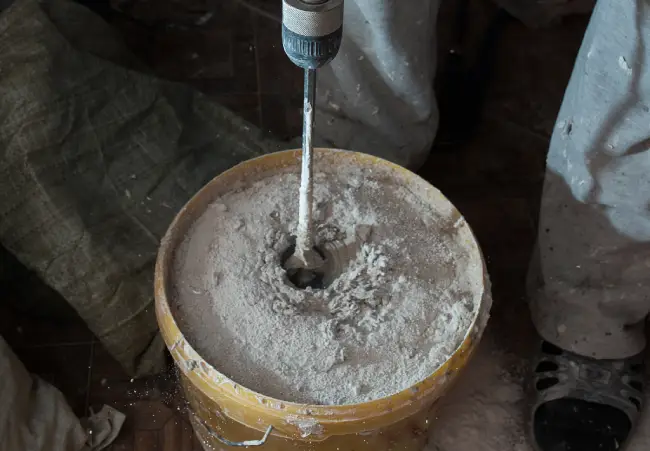
Cement acts as the main inorganic binder. When mixed with water, it undergoes a hydration reaction and hardens into a strong solid, providing the base strength for adhesion.
2. Quartz Sand
The filler for strength and density
Quartz sand improves the adhesive’s compressive strength and abrasion resistance. Its fine particles fill the gaps in the cement matrix, increasing density, strength, and overall stability.

3. Modified Polymer Emulsion or RDP Powder
For flexibility and bonding
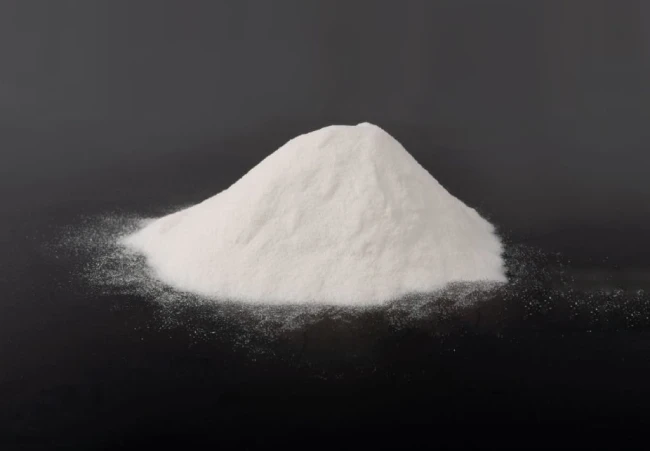
These polymers form a flexible film within the adhesive, improving elasticity and allowing it to adapt to substrate movement. Redispersible polymer powder (RDP) performs similarly once rehydrated. These polymers enhance crack resistance and freeze-thaw durability.
4. Additives
For workability and performance balance
Common additives include:
✅Cellulose ether or starch ether – for water retention and thickening
✅Calcium formate – to boost early strength
✅Water-reducing agents – to improve flow
These additives work together to optimize water retention, open time, bonding strength, and workability, ensuring consistent application and long-term performance.
(For recommended additive formulations for C1 and C2 tile adhesives, click here: C1 tile adhesive, C2 tile adhesive)

5. Auxiliaries: For functional enhancement
Auxiliary agents help adjust flow, viscosity, and drying time. Like defoamers, water repellents, and mildew inhibitors, may be added as needed to enhance specific properties.
The 5 raw materials above are mechanically blended into a dry, high-performance adhesive powder. The final product features high bonding strength, water resistance, aging resistance, and user-friendly application. It is also environmentally safe, containing no formaldehyde, benzene, or other harmful substances.

Mix Ratios Matter
Different tile types and installation environments require different ratios of cement, sand, and polymer. A typical mix ratio for standard tile adhesive is:
Cement : Quartz Sand : Polymer = 1 : 2 : 0.1–0.2
A well-balanced formula ensures sufficient bonding strength while adapting to various application conditions.
Vinyl Composition Tile Adhesive: An Innovative Alternative
In addition to the traditional cement-sand-polymer systems, an innovative product—vinyl-based tile adhesive—is emerging. This formulation replaces part of the traditional base with vinyl resin as the core modifier. It improves water resistance and flexibility while maintaining basic bonding function.
However, vinyl composition tile adhesive also has limitations. It costs 30%–50% more than standard C1 or C2 types and is more suitable for high-end projects. It requires stricter surface preparation and is more sensitive to moisture and uneven substrates. If the surface is dusty or damp, adhesion failure may occur. In contrast, C1 and C2 adhesives are more forgiving in general construction environments.

Tile Adhesive vs Cement-Sand Mortar
| Comparison Item | Tile Adhesive | Cement-Sand Mortar |
| Composition | Cement, quartz sand, polymers, water retention agents, and other additives | Cement, fine sand, water |
| Adhesion | Strong bonding, suitable for large-size and low water absorption tiles | Average bonding, best for small-size, high absorption tiles |
| Thickness | Thin-bed application (approx. 3–5 mm) | Thick-bed application (approx. 10–20 mm) |
| Installation | No soaking or wetting needed; direct tiling on dry surfaces | Requires tile soaking, wetting, and sometimes back-buttering |
| Efficiency | Easy to apply, fast installation, lower labor skill requirements | Slow installation, labor-intensive, higher skill required |
| Hollow Spots | Dense structure, low chance of hollowness or detachment | Prone to hollowness and tile detachment |
| Durability | Water-resistant, freeze-thaw resistant, aging-resistant, suitable for tough conditions | Less durable, easy to degrade in harsh environments |
| Material Usage | Thin layer saves material, cleaner application | Higher material consumption, messy work, higher cost |
| Application Scope | Best for large tiles, low absorption tiles, complex surfaces | Suitable for small tiles, high absorption tiles, and surface leveling |
Pros and Cons Comparison
Tile Adhesive
Pros:
– High bonding strength, ideal for large-format and low absorption tiles.
– Easy to apply without soaking tiles or wetting walls, saving time and effort.
– Thin-bed application saves space and materials, giving a smooth finish.
– Excellent water, freeze-thaw, and aging resistance, adaptable to complex environments.
– Low risk of hollowness or detachment; clean and professional finish.
Cons:
– Higher material cost compared to traditional mortar.
– Not suitable for structural tasks like wall leveling or bricklaying.

Cement-Sand Mortar
Pros:
– Low material cost and easy to obtain.
– Suitable for structural uses like wall leveling and brickwork.
– Traditional method, widely used.
Cons:
– Weaker bonding, prone to hollowness and detachment—especially with large or low absorption tiles.
– Labor-intensive, requires tile soaking and wall wetting.
– Thick-bed application uses more material and increases overall thickness.
– Poorer durability, water resistance, and crack resistance compared to tile adhesive.

Application Suggestions
🔘 Large or low absorption tiles: Use tile adhesive for strong bonding and long-term durability.
🔘 Small or high absorption tiles: Cement mortar is acceptable but must follow strict procedures to avoid failure.
🔘 Special substrates (e.g., gypsum board, insulation): Use flexible tile adhesive only.
🔘 High efficiency and clean finish required: Prefer tile adhesive.
Conclusion
Tile adhesive outperforms traditional cement mortar in bonding strength, ease of use, and durability. It is especially suitable for modern tile sizes and complex surfaces. Cement mortar is better suited for budget-conscious projects, small tiles, or surface leveling where high bonding strength is not essential.
In short, the tile adhesive composition and mix ratio are key to its performance. A well-designed formula ensures strong bonding, flexibility, and long-term durability. Whether it’s standard C1, advanced C2, or vinyl-based options for special conditions, great adhesion always starts with the right ingredients.

Posted by Isabel leave words
Hi, I've been in this industry for five years. I hope you enjoyed my blog. Welcome to leave a comment down below.
We have a ceramic adhesive factory where we add calcium carbonate. Does this have any effect?
Absolutely. But don’t add too much. Adding too much will reduce the strength and the tiles are prone to hollowing. But redispersible polymer powder is still the core additive for ceramic tile adhesive.
اواجه مشكلة في لاسق البلاط بعد الفرش ب١٠ دقائق تضهر قشرة على سطح لاسق البلاط تمنع اللتساق قطعة البورسلاين علما انة مكونات الخلطة
١- اسمنت بورتلاندي قوة 52.5 1طن
٢- رمل حجم 0.3 الى 0.8 2.2طن
٣- كاربونات الكالسيوم (فلر)
٦٠٠ كغم
٤- hpmc 200k ١٥ كغم
حسب الخلطة اللي عندك، واضح إن زمن الفتح قصير. جرّب تضيف RDP وشوف الفرق بنفسك، راح يطول زمن الفتح بشكل ملحوظ ويخلي اللاصق يظل قابل للالتصاق لفترة أطول.
هل عدم اضافة البوليمر RDP يؤثر على جودة لاسق السيراميك
لا يجب أبدًا الاستغناء عن بوليمر RDP.
Leave a Reply