


Mortar Additives Manufacturer
WOTAIchem is a trusted supplier of high-quality mortar additives. Our solutions are designed to enhance workability, strength and deliver consistent results. Our additives are particularly popular in the mortar ready mix industry. They offer a convenient, ready-to-use solution at construction sites.
Dry mix mortars are factory prepacked, which contain multiple ingredients. It’s primarily used in plasters, masonry mortars, self-leveling materials, tile adhesives, wall putty, and grouts. Some other applications may also use dry mortar, such as repair or shotcrete mortar.
Mortar Additives Product Range
Mortar mix is an important building material in modern construction. Our additives are specifically formulated to optimize their performance and meet the demands of the industry. By utilizing our mortar additives, you can save valuable time and energy in your construction operations.
The most frequently used mortar additives are cellulose ethers, RDP powers, construction-grade calcium formate, superplasticizers including SM and PCE, fibers, starch ether and powder defoamers.
WOTAIchem Mortar Additive Recommendations

Superplasticizer and Crack Resistance Additives
For all purposes in construction, mortar is a crucial component. It gives structural coherence and structural stability. Our additives reduce the frequency of maintenance and repairs.
-Product recommendation: Concrete fibers/pp fiber, PVA fiber, PAN fiber, PET fiber.
Fluidity enhancer: Our superplasticizers improve the flow and workability of mortar, making it easier to mix, apply, and finish.
-Product recommendation: SM, PCE.
Adhesive strength: The bond strength between mortar and different substrates is strengthened by these additives. Resulting in dependable and long-lasting adhesion.
-Product recommendation: Cellulose ethers, RDP
Mortar additives for cold weather
Expedite setting and promote early strength.
Our cement accelerators expedite the mortar setting process. It effectively speeds up the preparation steps and reduces waiting time.
Construction-grade calcium formate is particularly effective in cold weather conditions. It makes mortar laying and curing possible even in cold weather.
-Product recommendation: construction grade calcium formate.
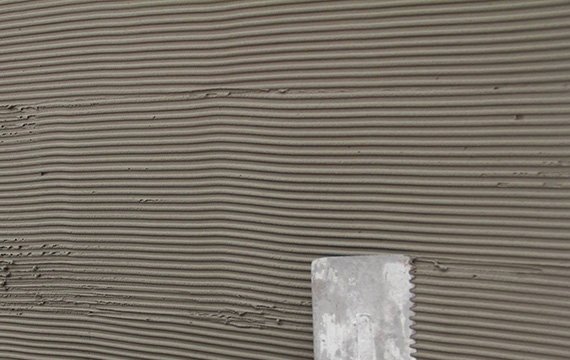
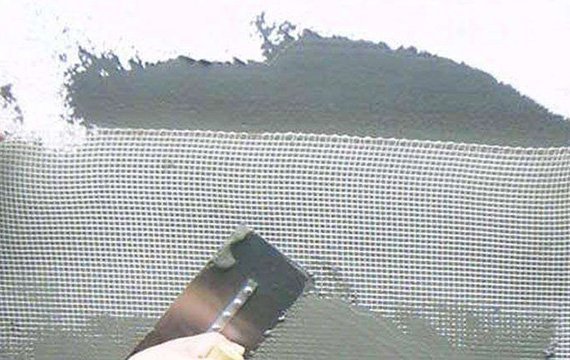
Strong Adhesion and Compatibility
We offer additives ideal for bonding mortar to various substrates, including concrete, masonry, stone, and more, ensuring excellent adhesion and structural stability.
-Product recommendation: cellulose ethers, superplasticizer, fiber.
Your Professional Mortar Additives Supplier
 OEM Solution
OEM solutions are all about meeting the specific requirements of a particular project. Custom manufacturing is precisely formulated to meet your exact needs.
 Sustainable Act
WOTAIchem is committed to adopting eco-friendly techniques and minimizing our carbon footprint. We insist on eco-friendly manufacturing and sourcing practices.
 Quality Control
All products must undergo several tests repeatedly to guarantee the highest level of quality. There is final testing for performance and stability before delivery.
 RD Strength
Innovation helps us create better solutions. Each product has its uniqueness, as well as flexible applications. Instead of providing a type of product, we offer solutions!
 Payment&Delivery
The lead time varies depending on your country, approximately 7-30 days. After an order is confirmed, we will ship it out immediately and update your tracking information.
Partner with WOTAIchem
At WOTAIchem, we go beyond just providing products but solutions! We offer formula analytics, dosage recommendations, application, and technical support. We have the resources to guide you in properly using and applying our mortar additives.






For dry mortar or putty with HPMC, you generally require around 25%-30% water content to achieve proper mixing.
The water demand for mortar is significantly affected when adding HPMC. The relationship between HPMC dosage and water demand in mortar exhibits a linear change within a specific time frame.
Initially, water demand decreases with low HPMC dosage, indicating a water-reducing effect. HPMC’s air-entraining action creates numerous small independent bubbles. Finally, it improves mortar flowability. When the dosage exceeds 0.025%, the water demand increases with HPMC dosage.
When mortar freezes, it can lead to a negative impact. It jeopardizes its strength and durability. Some of the most commonly seen phenomena are cracking and weak durability.
Accelerators such as calcium formate are effective additives for the hydration process. It helps the mortar gain strength quickly. It reduces the risk of freezing and allows for faster construction progress.
Retarders are additives that slow down the mortar setting time. In cold weather conditions, the setting time may be very short. Retarders are being used to extend the setting time and prevent premature stiffness.
Protecting mortar from freezing is a crucial step to prevent damage. Several factors determine the time duration, such as temperature and mortar composition. Mortar should be protected from freezing for at least 24 to 48 hours after placement.
The mix ratio may be slightly different depending on the type of mortar used. However, following the general guideline, one part cementitious material (such as Portland cement) to three parts sand is a typical mix ratio for tile mortar.
To make the mortar mix, you would thoroughly mix these components until they were well-blended. Water should also be added gradually while mixing to create the proper consistency.
Primarily the standard mortar. The traditional way of grouting and paving slabs is still widely used. Sand and cement are mixed in four parts sand to one part to create this pavement grout. After that, water is added gradually to this mixture.
Cement and mortar are essential construction materials, each serving distinct roles. Cement is a binding agent, typically composed of limestone, clay, shells, and silica. When mixed with water, it undergoes a chemical reaction, hardening to create a solid structure.
Mortar is a mixture containing cement, sand, and water. It acts as a bonding agent between bricks, stones, or concrete blocks, holding them together to form walls or structures. Mortar provides adhesion and strength, contributing to the overall integrity of a construction project.
In essence, cement is a key ingredient in mortar. It plays a vital role in creating durable and resilient building components. While cement provides strength, mortar offers cohesion and the ability to form cohesive structures.
 Contact Us