
 Send Your Inquiry
Hydroxypropyl Starch Ether (HPS) Market Analysis
Starch ethers, also known as esterified starch, are a type of modified starch products obtained through etherification reactions of natural starch. They have high stability, good water solubility, stable viscosity, excellent film-forming properties, and anti-aging characteristics.
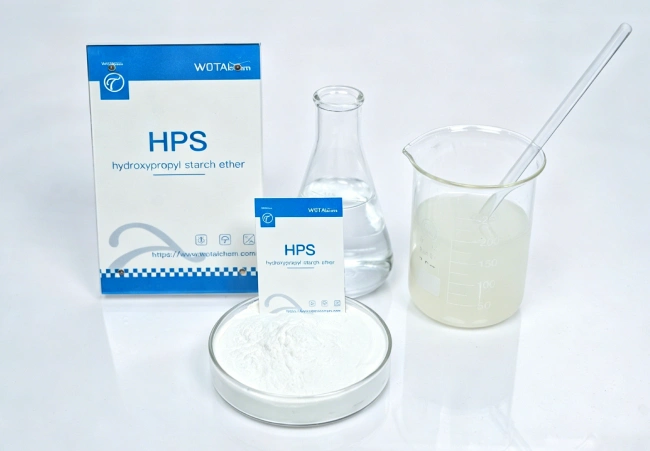
Moreover, they are renewable, non-toxic, and easily degradable, and are widely used in multiple fields such as papermaking, textiles, food, medicine, coatings, sewage treatment, building materials, and oil fields. The market demand for them is steadily increasing, and their application prospects are very broad.
I. Main Types and Core Characteristics of Starch Ethers
According to charge characteristics, starch ethers can be classified into three major categories: nonionic, cationic, and anionic:
Nonionic starch ethers
Represented by hydroxyethyl starch and hydroxypropyl starch, they are not affected by electrolytes or water hardness. Starch ethers with a lower degree of substitution have particles similar to those of native starch.
Compared with native starch, starch ether is easier to gelatinize, has higher hydrophilicity, better alkali resistance, and better viscosity stability of the gelatinized solution, and also has good film-forming properties, softness, smoothness, and film transparency, etc.
Cationic starch ethers
Carry a positive charge, have strong adsorption to negatively charged fibers and mineral particles, and have good dispersibility and fluidity. When the degree of substitution is greater than 0.07, they can swell in cold water and are key materials in papermaking and wastewater treatment.
Anionic starch ethers
Represented by carboxymethyl starch (CMS), they have good water solubility and high viscosity, and possess capabilities such as ion exchange, chelation, and flocculation.
Overall, after etherification modification, the gelatinization temperature of starch decreases, solubility improves, and the stability of the gelatinized solution significantly increases, which can meet the complex working conditions of industrial production such as acid and alkali resistance, shear resistance, low-temperature resistance, and high-temperature resistance.
II. Applications of Starch Ethers

1. Paper Industry: The Largest Consumption and Most Mature Application
The paper industry is one of the earliest and most extensive application fields of starch ethers. Low-substituted hydroxyethyl starch has strong water retention, good adhesion, and stable viscosity. It can reduce the migration of adhesives into the paper, improve the film-forming property, smoothness, and printability of the paper.
Experimental data show that, in the production of coated paper, replacing part of the styrene-butadiene latex with hydroxyethyl starch can significantly reduce raw material costs, while making the coating more stable on the machine, reducing splashing, and enhancing the stiffness of the paper.
Currently, starch ethers have become indispensable surface sizing agents and coating auxiliaries in the production of cultural paper, coated paper, and packaging paper.
2. Textile Industry
Starch ethers are mainly used in the textile industry as sizing agents, dyeing auxiliaries and adhesives. They have strong adhesion to wool, cotton and polyester-cotton yarns. The sizing film is flexible, uniform, water-soluble and easy to delint, meeting the modern sizing requirements of “high coldness and low viscosity”.
Studies have shown that carboxymethyl starch can be used as an ideal substitute for polyvinyl alcohol (PVA) for natural fiber sizing.It has better environmental performance and lower cost. Adding starch ether during the dyeing process can significantly increase the dye uptake rate and fixation rate, without affecting the color fixation property. The process is simple and suitable for large-scale production.
3. Food Industry
The characteristics of edible starch ethers are that, they have a relatively low degree of etherification and can withstand intense stirring, low-temperature freezing, and high-temperature heating. starch ether is mainly used as a binder and thickener in food, and is applied in the convenience food and frozen food industries. After etherification, the starch has significantly enhanced anti-aging ability compared to the original starch. The optimal cooking time is shortened and the cooking loss is significantly reduced.
When starch ethers are added to tangyuan, the sensory quality of the samples is improved, especially in terms of the texture, appearance, and shape of the tangyuan, there are obvious effects.
4. Pharmaceutical Industry
Like HPMC, starch ether is also safe and non-toxic. It is with excellent biocompatibility, and has great potential for application in the pharmaceutical field.
As a tablet excipient: Carboxymethyl starch can achieve stable and gradual drug release for over 8 hours, improving the utilization rate of the drug effect.
For preparing hemostatic materials: The polysaccharide hemostatic powder made from starch ether can be used for surgeries and deep hemostasis. It features non-toxicity, no irritation, wide source, and low cost.
5. Wastewater Treatment: Efficient Adsorption of Heavy Metals
With the increasing environmental protection requirements, starch ethers have been famous in the field of water treatment. Anionic starch microspheres have excellent adsorption effects on heavy metals such as Cu²⁺ and Pb²⁺. With an addition amount of only 0.007g/mL, the relevant pollutants can meet the discharge standards, and the removal rate can reach over 69%. It is an efficient and green heavy metal adsorption material.
6. Building materials, oil fields and other fields
– Building materials: Starch ethers play a role in thickening, retaining water and preventing run-off in mortars, putties and textured coatings, enhancing workability and strength.
– Oilfield drilling: Potato starch ether is used as a filter loss reducer, with a water loss reduction rate of up to 46%. It is environmentally friendly and degradable, and can reduce extraction costs.
– Others: It can be used in conductive coatings, degradable films, cigarette glues, pesticide slow-release carriers, etc. The application scenarios are continuously expanding.
Yuanwang Group’s Export Performance of Starch Ether in 2026
As a leading domestic producer of starch ether, Yuanwang Group, with its stable product quality, complete supply chain and global layout, achieved another record high in its export business in 2026:
✅ The total export of starch ether for the entire year of 2026 was 12,800 tons;
✅ The exports covered 28 countries and regions, including Russia, Indonesia, the United Arab Emirates, Saudi Arabia, Thailand, Malaysia, Pakistan, Sri Lanka, the Czech Republic, Ukraine, etc.;
✅ The exported products were mainly hydroxypropyl starch ether (HPS) and carboxymethyl starch (CMS), and the customer repeat purchase rate exceeded 85%.
From a global perspective, China’s starch ether has been exported to 164 countries and regions. Russia, Ukraine and the Czech Republic collectively account for 78% of the global import volume, while the emerging markets such as Indonesia, Sri Lanka and Pakistan have a growth rate of over 25%. Head enterprises like Yuanwang Group are continuously seizing international market shares.
Below are some of Yuanwang Group’s exporting bill of ladings in the year of 2026.

Conclusion
Esterified starch is made from raw starch, which is a renewable resource with a wide range of sources. It has excellent properties such as being non-toxic, pollution-free, easily degradable, and environmentally friendly. The production process is simple and the price is low.
Esterified starch has various unique properties such as ionic activity, surface activity, and thixotropy. Therefore, it is widely used in fields like papermaking, textiles, coatings, food, and medicine. In recent years, the research focus has been on composite modified esterified starch, which has the advantages of multiple single-esterified modified starches. Currently, the most popular research field at home and abroad is the field of ecological and environmental protection.
In conclusion, in response to the requirements of human environmental protection and sustainable development, the development prospects of esterified starch are very promising.

Posted by Isabel leave words
Hi, I've been in this industry for five years. I hope you enjoyed my blog. Welcome to leave a comment down below.
Leave a Reply