
 Send Your Inquiry

Water Reducers for Concrete: Strength Comparison of Naphthalene and Polycarboxylate Types
Concrete plays a significant role in projects such as high-speed rail, bridges, seaports, tunnels, subways, and hydropower. Water reducers are essential admixtures in concrete production, improving workability while reducing water content. Learn more about water reducer types here.
Below is a detailed introduction and comparison of the performance of naphthalene-based superplasticizer and polycarboxylate-based high range water reducers, along with their engineering applications.
3 Types of Water Reducing Admixtures
According to the Concrete Admixtures standard, water reducers are divided into ordinary, superplasticizers, and high-performance types.
▪️Ordinary water reducers: reduce water by 8%-14%, mainly lignosulfonate-based, an early generation product.
▪️Superplasticizers: reduce water by 14%-25%, including naphthalene-based, aliphatic, melamine-based, and aminosulfonate types. Naphthalene-based water reducers hold about 80% of the market and are often used combined with other admixtures in ultra-high-strength concrete.
▪️High range water reducers: reduce water by over 25%, mainly polycarboxylate-based, representing the top tier of water reducer products today.
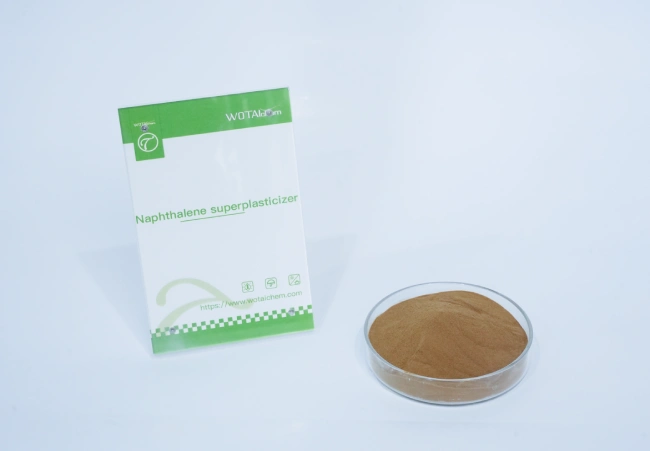
Naphthalene Superplasticizer
Classification
Naphthalene formaldehyde condensates (naphthalene-based water reducers) are categorized by their sodium sulfate (Na2SO4) content:
▪️High concentration: Na2SO4 < 3%
▪️Medium concentration: Na2SO4 3%-10%
▪️Low concentration: Na2SO4 > 10%
WOTAIchem™ can control Na2SO4 below 3%. These water reducers have a water reduction rate of 15%-25%, do not significantly affect setting time, and have low air entrainment (<2%). They belong to the non-air-entraining type and clearly improve concrete strength.
Critical Dosage
Naphthalene-based water reducers have a critical dosage, called the saturation point. Beyond this amount, further addition does not increase slurry fluidity or initial slump. Increasing dosage up to this point maintains high slump for longer.
Advantages
1. High water reduction and strength improvement
▪️ Typical dosage (1%-3% by cement weight) reduces water by 15%-25%, greatly boosting compressive strength. Early strength (1-3 days) rises significantly; 28-day strength improves by 20%-40%.
▪️ Ideal for fast formwork removal and shorter curing in precast or bridge projects.
2. Cost-effective
▪️Raw materials (naphthalene, formaldehyde) are widely available. Production is mature and scalable, making costs lower than polycarboxylate alternatives.
▪️Suitable for cost-sensitive projects like residential buildings and municipal roads.
3. Good compatibility with common cements
▪️Works well with ordinary Portland cements.
▪️Low risk of segregation or bleeding, easy to use without frequent mix adjustments.
4. Improves workability
▪️Enhances cement particle dispersion, increasing slump and reducing stickiness.
▪️Facilitates mixing, pumping, and vibration, easing construction labor.
▪️Helps with long-distance transport or pumping in moderate strength concretes.
5. Promotes early hydration and strength
▪️Speeds up hydration of C3S, accelerating hardening and early strength gain.
▪️Suitable for rapid-load projects like repairs or precast elements.
6. Stable and long shelf life
▪️Available as powder or concentrated liquid with stable chemistry.
▪️Powder stores over 6 months; sealed liquid 3-6 months.
▪️Resistant to degradation during transport and storage.

Disadvantages
▪️ Sensitive to cement type and composition, influenced by sulfonation, polymerization degree, ion type, Na2SO4 content, and cement mineralogy.
▪️ Slump loss can be fast, especially with higher sulfate content. In ready-mix concrete, usually combined with retarders and air-entraining agents to form pumpable mixes. Explore more: How to Use Water Reducers and Retarders in Concrete
Polycarboxylate High Range Water Reducers (PCE Superplasticizer)
Chemical Properties
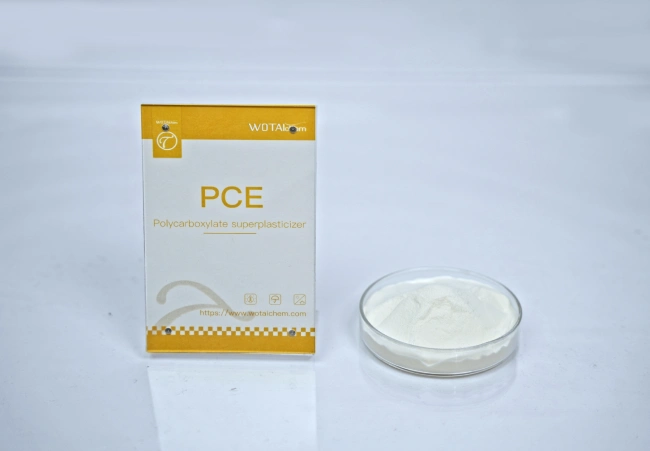
Polycarboxylate superplasticizers’ performance depends on polymer monomers and side chains (e.g., HPEG-2400, TPEG-2400). They are synthesized by radical solution polymerization and work effectively at low dosages (0.1%-0.2%). Side chains of polyethylene oxide (EO) grafts provide strong dispersion and delay hydration, greatly improving slump retention.
The comb-like branched structure offers steric hindrance that disperses cement particles efficiently even at low dosages. This prolongs the additive’s action on cement particles, offering:
▪️ Low dosage and high economy
▪️ Excellent slump retention and reduced flow loss
▪️Good compatibility with cements and lower sensitivity
Because of these, polycarboxylate superplasticizers are the top choice for low water-cement ratio, high strength, and durable concretes.
High Water Reduction and Slump Retention
✅Ideal for self-compacting, high-strength concretes.
✅Better dispersion than traditional naphthalene reducers at the same dosage and water-cement ratio.
✅Maintains high workability at very low water-cement ratios, offering flexible mix designs.
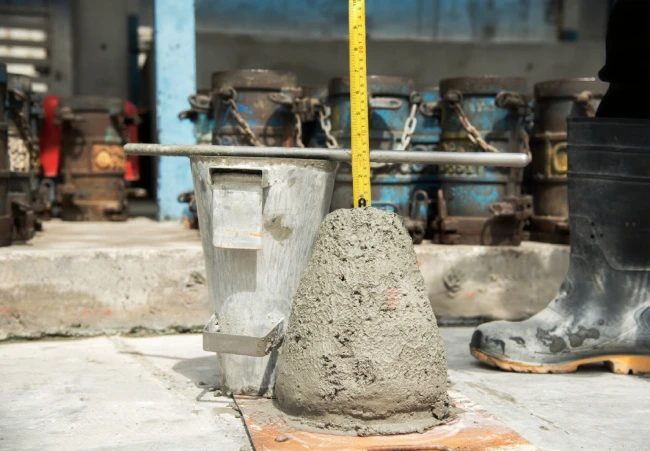
✅Initial slurry flow >250 mm and slump loss ≤10% after 1 hour, ensuring excellent plasticity.
This enhances mechanical properties, durability, and construction efficiency, especially for flowing, strong, self-leveling concretes.
Overdosage Issues
Strict dosage control is vital. Excess polycarboxylate reducer causes segregation, bleeding, or excessive air content. Above a certain dosage, fluidity may decrease and water reduction worsen.
Applications of Naphthalene-Based Water Reducers
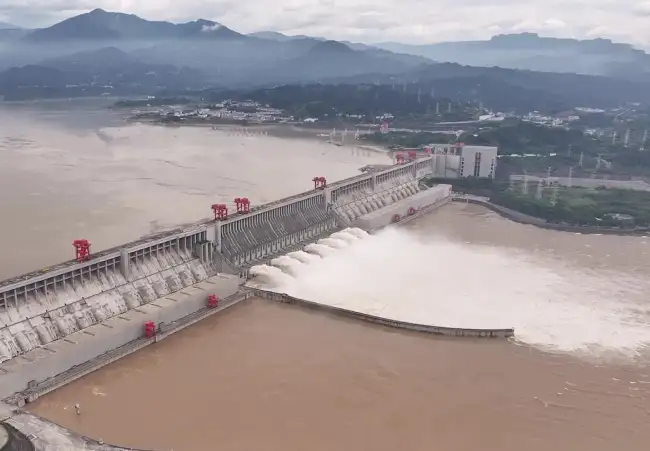
Naphthalene reducers are widely used due to mature technology and low cost. Many ready-mix plants add naphthalene-based concentrate directly to aggregates. Large projects like China’s Three Gorges Dam and other hydropower stations mostly use naphthalene-based reducers.
For concrete with slump 30-50 cm not requiring pumping (road slabs, dams), naphthalene water reducers often outperform polycarboxylate types.
Naphthalene Superplasticizer Recommended Dosage Methods
Three methods exist:
🔘 Pre-addition: before mixing water
🔘 Simultaneous addition: with mixing water
🔘 Delayed addition: after partial mixing, added one or multiple times, followed by remixing
Delayed addition is preferred for naphthalene reducers to avoid selective adsorption by cement minerals and improve dispersion.
Applications of Polycarboxylate Water Reducers
Key Engineering Projects
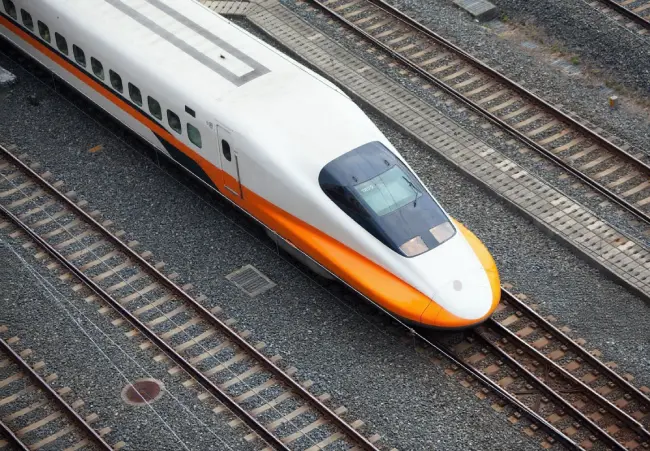
🏅 High-speed rail: Used in all major passenger lines in China, ensuring quality and speed for designs with 100-year service life.
🏅 Cross-sea bridges: For example, East China Sea Bridge and Hangzhou Bay Bridge use polycarboxylate reducers to meet century-long durability in harsh marine environments.
🏅 Water conservancy: South-to-North Water Diversion Project uses polycarboxylate reducers to produce concrete with permeability ≥ P12, frost resistance ≥ F300, and 100-year design life.
Comparative Tests of Naphthalene vs Polycarboxylate Reducers
Tests compared flowability, slump, demolding strength, and 28-day compressive strength under standard conditions.

1. Flowability
▪️Both types improve flow with dosage increase.
▪️Polycarboxylate shows strong effect at low dosage (0.7%-0.9%).
▪️Naphthalene needs higher dosage (~2.2%) to reach similar flow (~190 mm).
Table 1 Results of Cement Paste Flowability Test
| Dosage of Admixture (%) | Flowability (mm) | ||
| Naphthalene Superplasticizer | Polycarboxylate Superplasticizer Sample 1 | Polycarboxylate Superplasticizer Sample 2 | |
| 0.50% | — | — | 195 |
| 0.60% | — | — | 215 |
| 0.70% | — | — | 230 |
| 0.80% | — | 185 | — |
| 0.90% | — | 210 | — |
| 1.00% | — | 235 | — |
| 1.80% | 120 | — | — |
| 2.00% | 160 | — | — |
| 2.20% | 190 | — | — |
2. Slump and Strength
▪️Polycarboxylate significantly improves slump and achieves 28-day strengths over 60 MPa at 0.9% dosage.
▪️Naphthalene achieves 65 MPa at 2.2%, with slower strength gain.
▪️Polycarboxylate shows early strength benefits (1 day), aiding construction speed and formwork turnover.
Table 2 Test Results of Concrete with Different Superplasticizers
| Dosage of Admixture (%) | Naphthalene | Polycarboxylate Sample 1 | Polycarboxylate Sample 2 | ||||||
| Slump | 28d | Demolding Strength | Slump | 28d | Demolding Strength | Slump | 28d | Demolding Strength | |
| 0.50% | — | — | — | — | — | — | 15 | 65 | 22.0 |
| 0.60% | — | — | — | — | — | — | 30 | 69.2 | 25.6 |
| 0.70% | — | — | — | — | — | — | 50 | 71.2 | 28.3 |
| 0.80% | — | — | — | 10 | 60.3 | 21.0 | — | — | — |
| 0.90% | — | — | — | 25 | 65.7 | 24.5 | — | — | — |
| 1.00% | — | — | — | 45 | 67.2 | 26.4 | — | — | — |
| 1.80% | 0 | 59.0 | 21.0 | — | — | — | — | — | — |
| 2.00% | 20 | 63.2 | 23.4 | — | — | — | — | — | — |
| 2.20% | 45 | 65.4 | 25.6 | — | — | — | — | — | — |
3. Overall
🔘 Polycarboxylate reducers excel in efficiency, slump retention, and strength gain, suitable for demanding concrete like self-compacting and high-strength mixes.
🔘 Naphthalene reducers remain cost-effective for standard concrete and cost-sensitive projects, especially where slump retention is less critical.
Naphthalene-based and polycarboxylate-based admixtures both fall under the broader category of water reducers. Each is suitable for different concrete requirements. You can select them based on your project’s specific needs for strength, workability, and cost-effectiveness.
For project-specific advice, please provide your parameters. Contact WOTAIchem engineers via WhatsApp: +86 185 5317 0666
Explore More: Water Reducers: Types, Grades and Applications

Posted by Isabel leave words
Hi, I've been in this industry for five years. I hope you enjoyed my blog. Welcome to leave a comment down below.
Leave a Reply