
 Send Your Inquiry
Types of Fiber Reinforced Concrete (FRC) | Full Guide to Properties and Uses
Concrete is one of the most widely used construction materials in the world. However, due to its natural characteristics, concrete has several drawbacks such as high brittleness, low tensile strength, poor crack resistance, and limited strain capacity.
To overcome these problems, fibers are added to concrete to enhance its toughness. The emergence of Fiber Reinforced Concrete (FRC) has made it possible to apply concrete in more complex environments and special engineering projects.
Common fibers used in fiber reinforced concrete include metal fibers, synthetic fibers, and mineral fibers. This article provides a comprehensive overview of the different types of fiber reinforced concrete, comparing their characteristics and applications. It also analyzes how various fiber types influence the mechanical properties, autogenous shrinkage, and fire resistance of concrete.

Fiber Reinforced Concrete Definition
History of Fiber Reinforced Concrete
The use of fibers in concrete dates back to the early 1960s. Batson first introduced the concept of fiber reinforced concrete (FRC) and the fiber spacing theory.
Since then, the growing demand for high-strength and durable concrete has led to the addition of fibers, superplasticizers, and other admixtures to improve concrete’s compact microstructure and mechanical performance.
What is Fiber Reinforced Concrete
Fiber reinforced concrete is a composite material made by mixing specific types of short or long fibers into traditional concrete. These fibers form a three-dimensional reinforcement network within the concrete, which helps control micro-crack development and improves overall performance.

Types of Fibers Used in Fiber Reinforced Concrete
Common fibers used in concrete reinforcement can be grouped into three categories: metal fibers (e.g., steel fibers), synthetic fibers, and mineral fibers.
Mechanical Properties of Different Fiber Types
1. Metal Fibers – Typically Steel Fibers
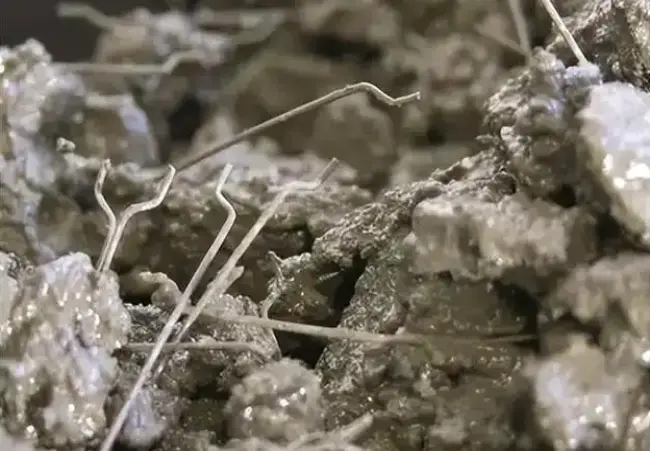
Steel fibers have a high Young’s modulus and tensile strength. They also offer good stability under ambient temperatures, making them ideal for use in UHPC (Ultra-High Performance Concrete).
Steel fibers come in various shapes, such as straight or hooked ends, which improve bonding with the concrete matrix and enhance reinforcement.
Although steel fibers are the most commonly used in UHPC, there are some drawbacks:
(1) They may corrode;
(2) They have high density;
(3) They are costly.
Since the cost of steel fiber reinforced concrete is relatively high, this has led to the use of other fiber types in UHPC.
2. Synthetic Fibers
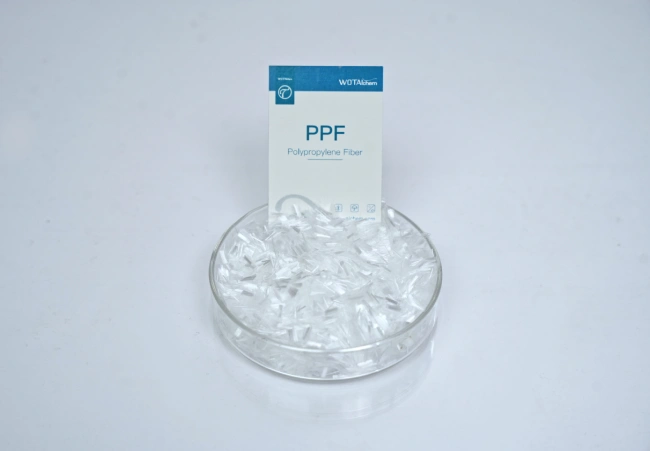
Synthetic fibers include PP fibers, PET fibers, and PVA fibers. Compared to steel fibers, synthetic fibers offer unique advantages. They are widely available, cost-effective, chemically stable, and flexible. These fibers can improve fire resistance and volume stability of concrete.
For example, polypropylene fibers help reduce early-age plastic shrinkage cracks and enhance concrete’s impermeability and impact resistance. Synthetic fibers are proven to improve concrete ductility.
3. Mineral Fibers
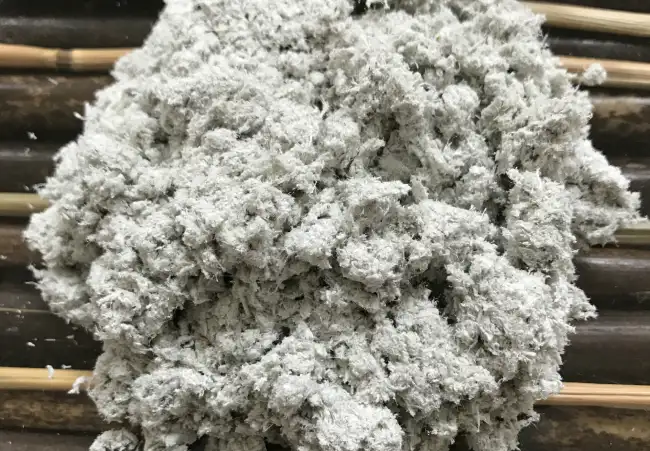
Basalt fibers and wollastonite fibers are typical mineral fibers that can enhance the mechanical strength of concrete. They are cheaper than steel fibers and do not corrode.
Basalt fiber is a natural material made from volcanic rock, with a high melting point of about 1450–1500°C. Wollastonite fiber is a natural silicate fiber made of silica, calcium oxide, and alumina.
4. Carbon Fiber – Carbon Fiber Reinforcement in Concrete
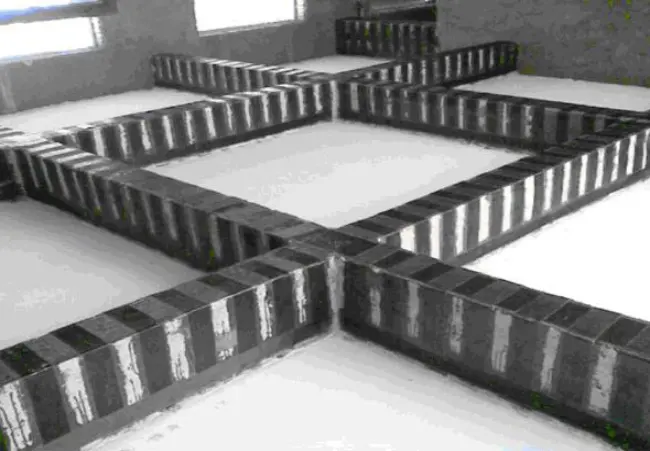
Carbon fiber has the highest tensile strength and Young’s modulus among all fiber types. Even small amounts can significantly improve the mechanical properties of concrete and reduce autogenous shrinkage.
Carbon fiber is commonly used in demanding applications such as large-span bridges and critical sections of high-rise buildings.
5. Other Fibers
Cellulose fiber, a natural polymer made from wood, is used as an internal curing agent to limit shrinkage. Its dense microstructure helps reduce crack width and improve concrete durability.
Coconut fiber is a natural plant fiber. It is renewable, biodegradable, and contains high amounts of lignin and cellulose. It offers good toughness and water absorption. Its rough surface improves bonding with cement paste, but its high water absorption can increase the concrete’s overall water uptake and affect porosity and durability.

Fiber Reinforced Concrete(FRC) Types
Fiber reinforced concrete can be categorized based on the type of fiber added. See below chart for the main types.
| Type | Main Fiber Material | Properties and Application |
| Steel fiber reinforced concrete | Steel fiber | Steel fiber reinforced concrete advantages: High strength and elastic modulus. Greatly improves the tensile strength, toughness, and impact resistance of concrete. Widely used in structural load-bearing and high-wear areas such as industrial floors, bridges, and tunnels. Steel fiber reinforced concrete disadvantages: Steel fibers tend to clump during mixing, reducing workability. Pumping is difficult. Prone to corrosion. Heavy self-weight and high steel usage lead to higher costs. |
| Glass fiber reinforced concrete | Glass fiber | Glass fiber reinforced concrete advantages: High tensile strength and corrosion resistance. Enhances crack resistance and durability. Used in thin-walled components and decorative panels.
Glass fiber reinforced concrete disadvantages: Strength and toughness degrade significantly over time when exposed to the atmosphere. Early strength fades, and performance can revert to that of ordinary concrete. |
| Carbon fiber reinforced concrete | Carbon fiber | Advantages of carbon fiber reinforced concrete: Extremely high elastic modulus and tensile strength. Significantly improves strength and fatigue resistance. Mostly used in high-performance concrete and advanced engineering. Disadvantages of carbon fiber reinforced concrete: Very expensive, which limits large-scale engineering use. |
| Polypropylene fiber reinforced concrete | Polypropylene fiber | Cost-effective. Reduces plastic shrinkage cracks and improves freeze resistance and impact strength. Enhances durability. Similar to steel fiber in resisting chemical attack from hydration products. Offers good tensile strength. Random 3D distribution helps control micro-cracks due to its large surface area.
Widely used in pavements, floors, and precast elements. |
| Polyester fiber reinforced concrete (PET fiber) | Polyester fiber | Good alkali resistance and durability. Enhances crack resistance of concrete. Low cost. Common in general construction applications. |
| Other synthetic fiber reinforced concrete | PVA fiber, PAN fiber, etc. | Used to improve toughness, crack resistance, and impact performance. Ideal for high-performance and special concrete.
These fibers interact well with cement and load-bearing wall structures. Environmentally friendly, non-toxic, and harmless to nature. |
| Basalt fiber reinforced concrete | Basalt fiber | Made from volcanic rock. Naturally high chemical and thermal stability.
Improves internal pore structure and helps limit crack formation and propagation in concrete.
Cost is comparable to synthetic fibers. |
| Natural fiber reinforced concrete: coconut fiber reinforced concrete; banana fiber reinforced concrete; cellulose fiber reinforced concrete | Sisal, jute, cellulose, coconut, etc. (natural fibers) | Main fiber components include cellulose, hemicellulose, lignin, pectin, and small amounts of waxy materials.
Under joint action with cement load surfaces, plant fibers can bond with cementitious matrices and improve mechanical performance.
Advantages of natural fiber reinforced concrete: Eco-friendly. Enhances toughness and crack resistance. Mainly used in non-structural concrete. |
Economic Comparison
The typical dosage of steel fiber is 40–120 kg/m³. At the minimum rate of 40 kg/m³ and a market price of around $1.5/kg, the cost increase is about $60/m³.
In comparison, polypropylene fiber at 4 kg/m³ costs about 4 kg × $1.1/kg = $4.4/m³.
From a cost perspective, steel fiber ($60/m³) is significantly more expensive than polypropylene fiber ($4.4/m³).
This means that in applications where basic performance like crack resistance and ductility improvement is sufficient, polypropylene fiber offers better cost-effectiveness, making it suitable for projects with budget constraints and no extreme mechanical requirements.
Key Properties of Fiber Reinforced Concrete
1. Excellent Mechanical Properties
Compared to conventional concrete, fiber reinforced concrete shows significant improvements in tensile strength, flexural strength, and impact resistance.
These advantages make it ideal for demanding applications such as bridge decks, foundations and frames of high-rise buildings, and airport runways. FRC can handle higher loads and complex stress conditions, ensuring long-term structural safety.
2. Outstanding Crack Resistance
Crack control is one of the major advantages of fiber reinforced concrete. Cracks compromise durability by allowing water and harmful substances to enter the concrete, accelerating deterioration and corrosion. Fibers help restrain crack formation and propagation, improving waterproofing and extending service life.
3. Good Durability
Thanks to its crack resistance and the inherent properties of fibers, FRC offers high durability. It performs well in harsh environments like chloride attacks in marine structures, freeze-thaw cycles in cold climates, and chemical corrosion in industrial facilities. It reduces maintenance and repair costs, providing excellent long-term value.
4. Construction Efficiency
FRC offers benefits during construction. Some fibers can be added directly during mixing, avoiding complex rebar placement. This simplifies the process and improves efficiency.
FRC also has good workability and adaptability to complex shapes and forms, making placement and molding easier.

Objectives and Benefits of Using Fiber Reinforced Concrete
✅Crack Control – Prevents the expansion of existing defects and delays new crack formation.
✅Water Resistance – Improves matrix density to block water ingress.
✅Durability – Enhances resistance to freezing, fatigue, and extends service life.
✅Impact Resistance – Increases the matrix’s ability to deform, improving toughness.
✅Tensile Strength – High-modulus fibers can improve tensile capacity.
✅Aesthetic Finish – Provides a denser, smoother, and more refined concrete surface.
Factors Affecting Properties of Fiber Reinforced Concrete
1. Fiber Dosage
Fiber content has a major influence. Moderate amounts improve crack resistance, toughness, impact resistance, and freeze-thaw durability. However, excessive fibers may cause clumping and reduce strength and uniformity.
2. Fiber Type and Properties
Different fibers (steel, polypropylene, basalt, natural fibers) offer varying physical and chemical properties.
▪️Steel fiber: Improves freeze-thaw and crack resistance.
▪️Polypropylene fiber: Enhances crack control and anti-carbonation.
▪️Natural fibers (e.g., coconut, banana): Improve ductility but absorb more water, requiring adjustments in mix design.
3. Fiber Length and Dispersion
Length and even distribution are critical. Overly long fibers can clump and reduce performance. Well-dispersed fibers bridge cracks effectively and improve strength and ductility.
4. Water-to-Binder Ratio and Mix Design
Fibers affect the water demand and workability. Proper water-binder ratio and the use of superplasticizers are essential to maintain flow and compactness.
5. Fiber-Matrix Bonding
Good bonding between fiber and cement matrix ensures effective stress transfer. Strong interfacial adhesion helps prevent crack propagation and improves strength and durability.
6. Hybrid Fiber Synergy
Using a combination of fibers can deliver a synergistic effect. Hybrid fibers enhance impact resistance, crack control, and durability more effectively than a single fiber type. This is especially beneficial in UHPC where fiber combinations help resist crack initiation and propagation.
7. Environmental Conditions and Curing
Service environments (e.g., freeze-thaw cycles, chloride exposure, carbonation) greatly affect concrete performance. FRC durability depends on adapting the design to these specific conditions.
Recommended Fiber Supplier – Yuanwang Group
In the field of fiber reinforced concrete, Yuanwang Group is a trusted choice thanks to its wide range of synthetic and natural fiber products.
We specialize in the R&D and production of synthetic fibers (including PVA, PP, PET, PAN) and natural fibers like cellulose fiber and wood cellulose fiber. Our solutions are tailored for diverse project needs—from enhancing basic crack resistance and ductility to meeting stringent performance requirements in complex engineering scenarios.
Our fiber products not only meet performance expectations but are also competitively priced, helping you achieve better cost-performance balance.
Whether your project demands high durability, cost-efficiency, or custom performance, Yuanwang Group offers reliable and tailored fiber solutions. Feel free to contact us for partnership and technical support.

Posted by Isabel leave words
Hi, I've been in this industry for five years. I hope you enjoyed my blog. Welcome to leave a comment down below.
Leave a Reply