
 Send Your Inquiry
Tired of Cold Walls? Try Insulating Mortar for a Warmer Home
What Is Insulating Mortar and What Is It Used For?
What Is Insulating Mortar?
Insulating mortar is a special type of building material used to keep walls warm in winter and cool in summer. It’s made from a mix of binders (like cement), lightweight insulating materials, and other additives. Its main features are good thermal insulation, energy efficiency, and environmental friendliness. It can be used in areas:
🧱New buildings to insulate walls
🧱Energy-saving upgrades in older buildings
🧱Special areas that require extra insulation
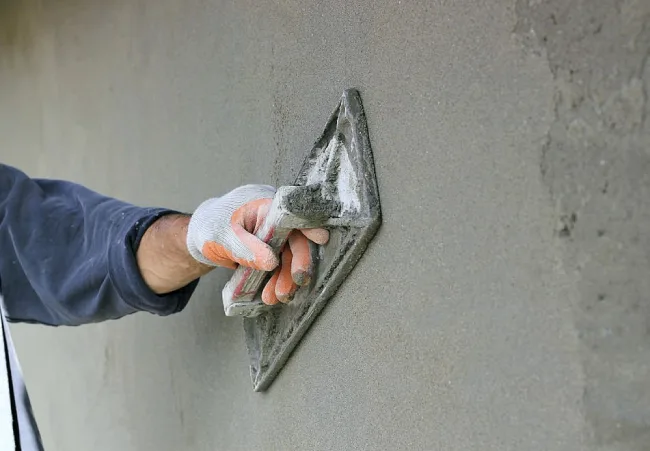
What Does It Do?
The main purpose of thermal insulation mortar is to keep indoor temperatures more comfortable:
In cold winter months, buildings with insulating mortar can be 3–5°C warmer than those without it.
In hot summer months, it can help lower the indoor temperature by 2–4°C, reducing the load on air conditioning systems.
A Note on Its Limitations
Thermal insulation mortar has limited insulation performance on its own, so it’s usually used alongside other wall insulation systems—especially when the surface of the wall is uneven or needs special treatment (like walls made of aerated concrete blocks). In these cases, it helps smooth out surfaces and works as a protective mortar insulation layer.
What Is Insulated Mortar Made Of?
Thermal insulation mortar is made up of several carefully chosen components to ensure good insulation, strength, and workability:
1. Ordinary cement is used as the main inorganic binder.
2. Finely ground slag powder or silica fume is added as a mineral strengthening material.
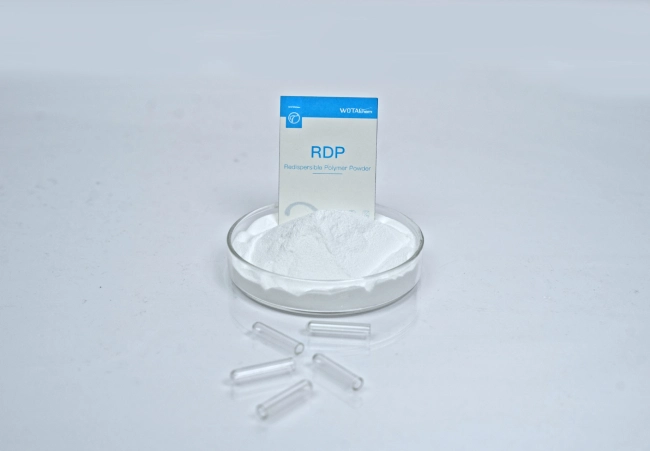
3. Redispersible Polymer Powder, an organic polymer, is added in sufficient amounts to give the mortar strong adhesion and crack resistance.
4. Expanded glass beads and fly ash hollow microspheres are used as lightweight insulating aggregates.
5. Additional additives are included, such as:
▪️Cellulose ether to help retain water
▪️Dispersing agents to make mixing with water easier
▪️Wood cellulose fibers to improve early crack resistance
Key Points:
1. Redispersible Polymer Powder improves both crack resistance and adhesion strength when added in the right amount.
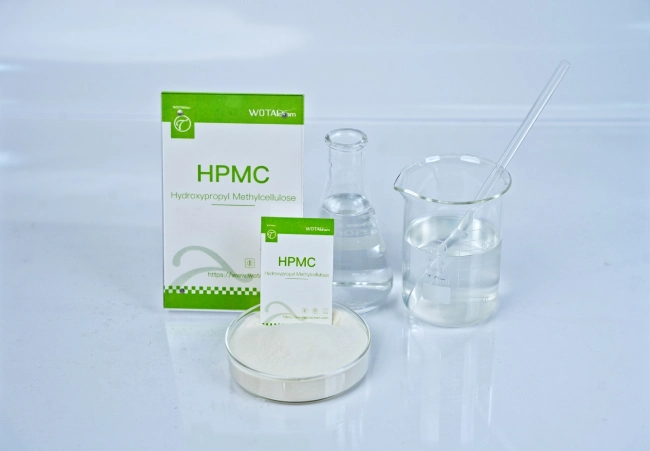
2. To make the mortar easy to apply, it needs to be sticky and thixotropic (easy to spread but stable once applied). That’s why high-viscosity cellulose ether (e.g., 200,000 mPa·s hydroxypropyl methyl cellulose) is used as a water-retaining agent.
3. Wood cellulose fibers help prevent cracking during the drying process.
4. A blend of expanded glass beads and fly ash hollow microspheres is used for insulation. This combination not only creates a better particle mix (for smoother texture and better performance), but also helps reduce material costs.
What Affects the Performance of Insulated Mortar?
(1) Effect of Redispersible Polymer Powder on Bonding Strength
Adding redispersible polymer powder (a type of polymer) significantly improves how well the insulating mortar sticks to surfaces. The right amount of redispersible polymer powder can greatly boost bonding strength, even in tough conditions like freezing and thawing cycles.
| Addition amount of redispersible polymer powder /% | 0 | 3.0 | 3.5 | 4.0 | 4.5 | |
|
Bonding Strength/MPa | Standard State | 0.41 | 0.65 | 0.67 | 0.78 | 0.91 |
| Freezing and Thawing Cycle (5 times) | 0.42 | 0.41 | 0.42 | 0.55 | 0.63 | |
WOTAIchem redispersible polymer powder is precisely formulated to ensure strong adhesion and long-lasting durability, making it a top choice for high-quality insulating mortar.
(2) Effect of Fly Ash Hollow Microspheres on Dry Density and Thermal Conductivity
Fly ash hollow microspheres are lightweight materials with a very low bulk density (only about 400–650 kg/m³) and a high porosity (66%).
When used in mortar, they help reduce the overall weight while still filling gaps effectively, especially between other particles like expanded glass beads. This leads to a dense but lightweight mortar that insulates well.

(3) Effect of Different Types of Cellulose Ether on Workability
Cellulose ether is essential for improving how easy the mortar is to mix and apply. It comes in many types, with viscosities ranging from 500 mPa·s to 400,000 mPa·s.
There are two ways to improve workability:
Use more cellulose ether, or
Use a higher-viscosity type.
However, adding too much increases costs and reduces water resistance. A better approach is to use a higher-viscosity cellulose ether, such as 200,000 mPa·s, which improves workability without sacrificing durability.
WOTAIchem offers a variety of high-viscosity cellulose ethers to meet these needs efficiently. We provides different viscosity HPMC for external wall insulation mortar as well as dry mix mortar. Click here to learn more.
(4) Effect of Wood Cellulose Fibers on Early Crack Resistance
Thermal insulation mortar is usually applied in thick layers, sometimes several millimeters at once. This makes it prone to cracking during the initial drying stage.
Wood cellulose fibers help prevent this by:
✅ Slowing water loss, especially under high temperatures
✅ Helping even out water evaporation between the surface and inside layers
✅ Making shrinkage more uniform, so cracks don’t form
For example, thermal insulation mortar with and without wood cellulose fiber was applied to a highly absorbent calcium silicate board, with a single application thickness of 3mm. After application, the samples were immediately placed in a 100°C drying oven with forced air circulation for 3 minutes. The results showed that the mortar without wood cellulose fiber developed cracks, while the mortar with wood cellulose fiber remained crack-free.
WOTAIchem wood cellulose fibers act like a “crack-resistant shield” by maintaining moisture balance throughout the mortar layer, greatly improving early crack resistance.
WOTAIchem – Your Trusted Supplier of Insulating Mortar Additives
Specializing in mortar additives, WOTAIchem professionally manufactures high-quality redispersible polymer powder, cellulose ether, and wood cellulose fiber. With advanced production technology and a strict quality control system, we provide reliable raw materials that enhance the performance of thermal insulation mortar and other building materials. Our solutions help you create high-performance insulating mortars that meet diverse energy-saving demands in construction.
Take action now and experience a new level of energy efficiency! Visit our website for detailed product information, or add us on WeChat: 185 5317 0666 to speak directly with our expert team and receive a customized product plan and quote.

Posted by Isabel leave words
Hi, I've been in this industry for five years. I hope you enjoyed my blog. Welcome to leave a comment down below.
Leave a Reply