
 Send Your Inquiry
How Long Does Joint Compound Take to Dry? A Practical Guide
Joint compound is mainly used on gypsum board walls to fill in the gaps and level uneven surface. After application, you need to wait until it is completedly dry before polishing it to achieve a flat and smooth surface. If you sand the joint compound before it is fully dry, it is easily stick together and get worse.
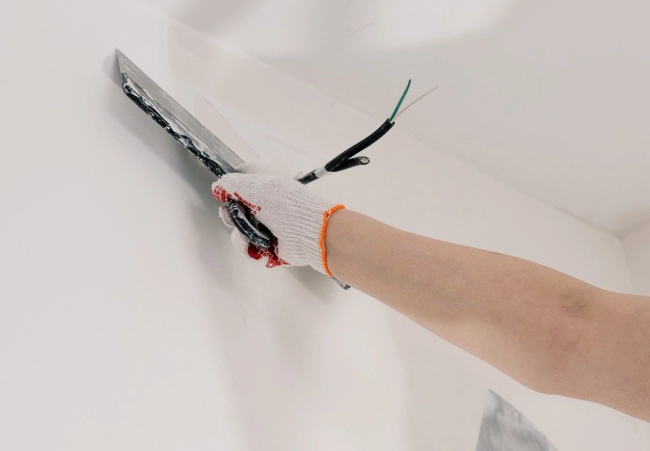
That is the goal of this article – to illustrate how long does joint compound take to dry. After you read it, you will find it much easier to work with on the job.
Does Joint Compound Dry Hard?
In joint compound, the calcium carbonate is the main element, accounting for about 55% of the total ingredients. When the joint compound is applied to the wall, the moisture gradually evaporates and runs away. The powder particles are squeezed and bonded together with the help of the polymer powder, leading to a solid layer, and it becomes hard.
However, there is an exception. For pipe joint compound, since it contains different ingredients, it will not dry hard but will always remain flexible.
How to Tell If Joint Compound Is Dry?
Sometimes, the surface may appear dry, but that doesn’t mean the interior is dry as well. Joint compound is applied in thick layers, so while the surface dries first, moisture can remain trapped inside. Therefore, judging solely by appearance is not accurate. The following three methods can help you determine whether joint compound is fully dry.
1. Check the Appearance
| Appearance | Dry or Not? |
|---|---|
| The color is dark grey and dull | In a fully wet state |
| The color is lighter, but still with some darker spots | There is still moisture underneath; not fully dry |
| The entire surface is uniformly white or light grayish white in color, with no dark spots | Fully dry state |
2. Touch Test
Gently press and touch the surface with clean fingers. Remember, touch the thickest part.
| Feel | Dry or Not? |
|---|---|
| Feels cool, slightly damp, or slightly sticky | Not dry |
| Feels slightly firm, a slight dent appears when pressing hard | Only the surface is dry; the inside is not fully dry |
| Feels slightly warm, dry and hard. Pressing does not leave a dent, and no powder nor wet paste will stick to your finger. | Fully dry |
3. Light Scrape Test
Choose an inconspicuous area on the wall as a test point. Gently scrape the thickest part with your fingernail. If you are worried about pressing too hard, just use the edge of your credit card to gently scrape the surface.
| Scrape Result | Dry or Not? |
|---|---|
| Scrape out soft material or wet residue | Not fully dry |
| Scrape out fine, dry powder | Fully dry |
How Long Does Joint Compound Take to Dry
Joint compound hardens by the evaporation of water. Therefore, all factors that affect the escape of water will change the speed of drying. For instance, factors such as the thickness of application, ambient temperature, air humidity, ventilation quality, the base layer of gypsum board, and the type of jointing compound product, etc.
When you apply the joint compound in a thick layer, or when the temperature is low, humidity is high, or ventilation is poor, the joint compound will dry very slowly. When you apply it in a thin layer, or when the temperature is warm, the air is dry, and there is good ventilation, it dries faster.
So, how long does each type of joint compound take to dry under the same conditions? The following section compares their typical drying times.
How Long Does Drywall Joint Compound Take to Dry
Drywall joint compound is specifically used for the joints of gypsum boards. There’re no special additives inside, and the moisture evaporates more easily. Under normal conditions, it will take about 20 to 22 hours for a joint of normal thickness to fully dry.
How Long Does All Purpose Joint Compound Take to Dry
The all purpose joint compound is an all-in-one type. It can be used for seams, nail holes and finishing. Its formula contains more powder and has a higher water content. It dries a little slower than drywall joint compound. It will take about 24 hours to fully dry.
How Long Does Dust Control Joint Compound Take to Dry
Water-retaining polymer is added to the dust control joint compound to reduce dust during sanding. This additive will lock in some moisture, to a certain extent delaying the evaporation of water.
For the same thickness, it will take several more hours than the all purpose joint compound. The thick layer takes nearly 30 hours to fully dry.
How Long Does Pipe Joint Compound Take to Dry?
The pipe joint compound does not dry hard like the wall joint sealant. The carrier of the pipe joint compound is oil, not water, so it always remains in a soft and sticky paste state. Only in this way can the tiny gaps between the threads be sealed.
How Long Should Joint Compound Dry Between Coats?
After applying the first layer of joint compound, it is necessary to wait until this layer is fully dry before applying the next one. For areas with thin application, wait for 8 to 12 hours. For areas of normal thickness, wait for at least 24 hours. If it is winter or in rainy days, you need to wait for 24 to 48 hours.
How Long Does Joint Compound Need to Dry Before Painting?
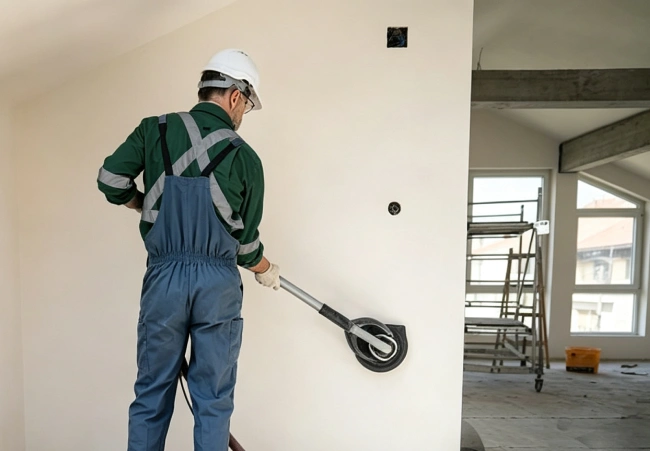
Wait until the joint compound is completely dry, then sand it, clean the dust thoroughly, and then paint it. For joints of ordinary thickness, it is recommended to wait for at least 24 hours. If you were repairing large pits or the weather is damp, it is suggested to wait for 48 hours.
How to Make Joint Compound Dry Faster?
1. Open the windows for ventilation.
This is the most reliable method for drying uniformly. Air flow will accelerate joint compound dry.
2. Increase the indoor temperature
When in cold weather, you can turn on the heating to raise the room temperature and accelerate the evaporation of water. The dry speed of joint compound will also increase.
3. Apply in layers
If the gap is very deep, do not fill it all one time since it will dry very slowly. It is recommended to apply it in 2 to 3 batches. After each batch is completely dry, apply the next layer. Although it is applied many times, the total time consumed by this method will be shorter.
4. Use quick-set drywall compound
If the construction period is too tight, you can use quick-set drywall compound temporarily. It will dry out in just a few dozen minutes. However, it has drawbacks. It will become harder after drying and requires repeated polishing, which is very laborious. Besides, if it is not used up within the specific time, it will start to harden and become unusable.
How to Keep Joint Compound from Drying Out?
Sometimes, when you use pre-mixed paste joint compound in drums, you may come across a troublesome issue: the compound hardens prematurely inside the drum before it’s even applied to walls, leaving very short time for application. Thus, in some cases, drying too quickly becomes a problem.
A Venezuelan customer of WOTAIchem Company encountered exactly this issue. What troubled them was that, once gypsum was added to the joint compound, the material would cure prematurely within the drum, resulting in an extremely short working time.
They turned to WOTAIchem, and we successfully resolved the issue through formulation optimization. We ultimately determined to eliminate gypsum from the joint compound formulation and instead incorporate water-retention additives such as HPMC and cellulose fibers.
This significantly delayed water loss and premature curing. This optimized formula passed the testing successfully in September. The customer reported plans to produce 6,000 to 8,000 five-gallon drums of joint compound per month using this new formulation.
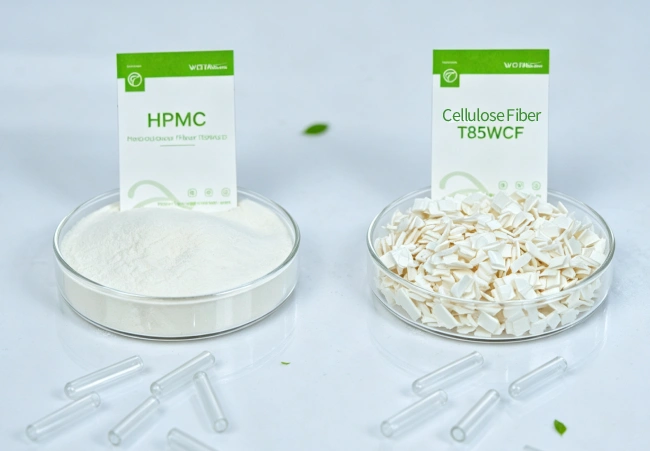
*Joint Compound formulations (WOTAIchem recommended)
| Ingredient | Percentage (%) | Weight | Function |
|---|---|---|---|
| 1. Calcium Carbonate | 55.00% | 15.40 kg | As an inorganic filler, it regulates the density and application workability of the gypsum joint compound. |
| 2. Industrial Talc | 10.00% | 2.80 kg | As a functional filler, it improves the application workability and lubricity of the gypsum joint compound, enables smoother scraping application. |
| 3. Styrene‑Acrylic Emulsion (50% Solid Content) | 3.00% | 0.84 kg | As a bonding enhancer, it can significantly improve the cohesive strength of the gypsum joint compound and its adhesion to substrates such as gypsum board and concrete. |
| 4. Hydroxypropyl Methyl Cellulose (HPMC Surface Treated) | 0.4‑0.6% | ≈0.14kg | It can lock the free water in the system, prevent the water from being absorbed too quickly by the substrate or evaporating prematurely, ensure the full hydration of the gypsum, and avoid cracking and powdering caused by water loss. |
| 5. Defoamer | 0.05% | 0.014kg | It can effectively eliminate harmful large air bubbles introduced during stirring and application, avoid defects such as pinholes and blowholes. |
| 6. Biocide/Preservative | 0.1‑0.2% | ≈0.04kg | It can inhibit the growth and reproduction of microorganisms such as bacteria and mold in the system, prevent the gypsum joint compound from mildew, odor, performance degradation. |
| 7. Wood Fiber | 0.50% | 0.14kg | It can significantly improve the crack resistance of the gypsum joint compound. Meanwhile, it has excellent water retention capacity, can extend the open operation time of the material, and promote the full hydration of the gypsum. |
Summary
Understanding how long does joint compound take to dry can help you plan the construction period well, avoid construction defects, and create a smooth and flat wall surface.

Posted by Isabel leave words
Hi, I've been in this industry for five years. I hope you enjoyed my blog. Welcome to leave a comment down below.
Leave a Reply