
 Send Your Inquiry
What is Cellulose Ether? Ultimate Guide to Its Properties and Applications
When you are doing building renovations or applying skincare products, you may not be aware that there is an invisible helper working quietly – it is cellulose ether. Many people think ETHER is difficult to understand. In fact, it is not that complicated.
This guide will help you fully understand what is cellulose ether. Let’s get started!
What is Cellulose Ether?
Simply put, cellulose ether is an upgraded version of natural cellulose after chemical modification. Before knowing it, let’s know what natural cellulose is first?
What is Cellulose?
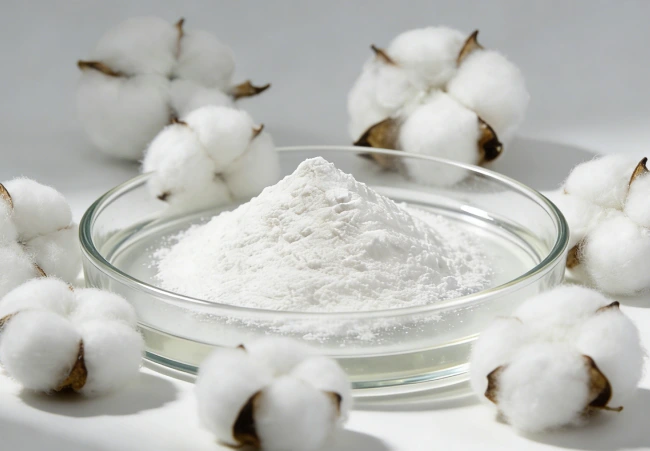
Cellulose is a large molecule polysaccharide composed of glucose. It is the main structural component of plant cell walls. At room temperature, cellulose is insoluble in water and most organic solvents.
Cotton has a cellulose content of nearly 100%, making it the purest natural source of cellulose. In general wood, cellulose accounts for 40-50%, with 10-30% hemicellulose and 20-30% lignin.
What is cellulose ether?
Cellulose ether is a high-molecular compound with an ether structure made from cellulose. It is the product of a chemical reaction between cellulose (from plants) and etherifying agents.
Classified according to the chemical structure of the substituents after etherification, it can be divided into anionic, cationic and nonionic ethers. Depending on the different etherifying agents used, there are:
Methyl cellulose, hydroxyethyl methyl cellulose, carboxymethyl cellulose, ethyl cellulose, benzyl cellulose, hydroxyethyl cellulose, hydroxypropyl methyl cellulose, cyanoethyl cellulose, benzyl cyanoethyl cellulose, carboxymethyl hydroxyethyl cellulose and phenyl cellulose, etc.
The most common application of cellulose ethers is as a water-retaining and thickening agent in building mortars, putties, grouting and tile adhesives.

DS and MS in Cellulose Ethers
Cellulose ethers are derivatives of cellulose where hydroxyl groups are etherified with substituent groups. The degree of DS and MS measures the extent of this etherification.
Degree of Substitution (DS)
DS stands for the degree of substitution. It shows the average number of hydroxyl groups on each unit of cellulose that substituent groups have replaced. Usually, the DS can range from 0 to 3.
Molar Substitution (MS)
For hydroxyalkyl derivatives of cellulose, the introduction of one hydroxyalkyl group creates an additional hydroxyl group. The molar substitution (MS) quantifies the substitution level for these derivatives. It represents the average moles of etherifying agent that react per unit. Theoretically, MS can be infinite.
For cellulose alkyl and carboxyalkyl derivatives, DS and MS are equivalent.
For hydroxyalkyl cellulose ethers, MS is usually greater than DS. However, it depends on the extent of side chain formation.
Importance of DS and MS
1. Higher DS and MS Values
Cost
Higher DS indicates higher costs due to increased substitution.
Gel Temperature
DS influences gel temperature and the gelling behavior of cellulose ether particles.
Resistance and Stability
Higher DS results in better resistance to enzymatic degradation and improved storage stability.
Flow and Application Properties
Higher DS enhances leveling and application properties.
2. Substitution Levels in Different Cellulose Ethers
– CMC (Carboxymethyl Cellulose): Common DS is 0.8-0.9. Domestic grades can reach a DS of 1. The premium grades can reach up to 1.2.
– CPMC: DS is around 1.6.
– HPMC: DS ranges from 1.6-1.8. It significantly loses viscosity around 60°C and can tolerate up to 65°C.
– HEC: DS ranges from 2.6-2.8, with an average of 2.2-2.5. It has a high gel temperature and is almost insensitive to hot water.
Cellulose Ether Thickening Mechanism
Cellulose ether thickening agents are non-ionic thickening agents. They achieve thickening through two effects – hydration and the entanglement of molecules.
1️⃣ The long molecular chains of cellulose ethers can easily form hydrogen bonds with water molecules in water. This combination enables them to absorb a large amount of water and expand significantly. So it is easier for the molecular chains to entangle with each other.
2️⃣ When they are added to emulsion paint, they absorb a large amount of water, causing a significant expansion of their own volume. This reduces the free movement space of pigments, fillers, and emulsion particles.
3️⃣ At the same time, the cellulose ether molecular chains entangle with each other to form a three-dimensional network structure. The pigments and emulsion particles are surrounded in the mesh, unable to move freely.
Under these two effects, the viscosity of the system is increased. Achieving the desired thickening effect as required!
Cellulose Ether Manufacturing Process
The production of cellulose ethers involves several steps. That includes alkalization, etherification, neutralization, and purification.
Alkalization
The first step is to create cellulose with an alkaline solution. This step is to activate the hydroxyl groups. This makes them more reactive for the subsequent etherification process.
Etherification
The activated cellulose reacts with various etherifying agents (such as methyl chloride for MC or propylene oxide for HPMC) to substitute the hydroxyl groups with ether groups. This step determines the specific type of cellulose ether produced.
Neutralization
After etherification, the reaction mixture is neutralized to stop the reaction and stabilize the product.
Purification
The final step involves purifying the cellulose ether to remove any unreacted chemicals and by-products. This is typically done through washing and filtration processes.
Properties of Cellulose Ether

1. Solubility
The solubility of cellulose ether varies based on the nature and degree of substitution of the substituent groups:
✅ Nature of Substituent Groups
Larger groups decrease solubility, while polar groups increase water solubility.
✅ Degree of Substitution (DS) and Distribution
Cellulose ethers dissolve in water within a specific DS range, usually between 0 and 3.
✅ Degree of Polymerization
Higher degrees reduce solubility, while lower degrees enhance solubility across different mediums.
2. Viscosity
Cellulose ether solutions exhibit unique viscosity properties:
✅ Concentration: Higher concentrations increase viscosity.
✅ Temperature: Viscosity typically decreases with rising temperatures.
✅ Additives: The presence of salts or other additives can modify viscosity.
3. Stability
Cellulose ethers are stable against air, moisture, sunlight, and moderate heat. However, they are susceptible to degradation by strong oxidizers, acids, and high-energy radiation.
4. Biodegradability
Cellulose ethers are biodegradable and non-toxic. This property makes them environmentally friendly alternatives to synthetic polymers. They can break down naturally over time. As a result, reducing the environmental footprint.
5. Safety
Cellulose ethers are recognized as safe additives in different industries(GRAS). They have a long history of safe use and are well-tolerated in various applications.
Key Types of Cellulose Ethers
1. By Substituent Groups
Single Ethers: Contain one type of substituent group. That includes Methyl Cellulose (MC), Ethyl Cellulose (EC), Hydroxyethyl Cellulose (HEC), and Carboxymethyl Cellulose (CMC).
Mixed Ethers: Contain more than one type. For example, Hydroxypropyl Methyl Cellulose (HPMC) and Hydroxyethyl Methyl Cellulose (HEMC).
2. By Ionicity
Ionic Ethers: E.g., Carboxymethyl Cellulose (CMC).
Non-Ionic Ethers: E.g., Methyl Cellulose (MC), Hydroxyethyl Cellulose (HEC).
Mixed Ionic and Non-Ionic Ethers: E.g., Hydroxypropyl Methyl Cellulose (HPMC).
3. By Solubility
Water-Soluble: E.g., Methyl Cellulose (MC), Hydroxyethyl Cellulose (HEC).
Organic-Soluble: E.g., Ethyl Cellulose (EC).
Major Cellulose Products in the Market
1. Methyl Cellulose (MC)
– Production: Derived from refined cotton or wood pulp treated with alkali and methyl chloride.
– Properties: Soluble in cold water but not hot water. The MC can form gels at higher temperatures and has good water retention.
2. Hydroxypropyl Methyl Cellulose (HPMC)
– Production: Produced from cellulose treated with alkali, propylene oxide, and methyl chloride.
– Properties: Soluble in cold water. HPMC has a higher gelation temperature than MC. It offers excellent water retention and enzyme resistance.

3. Hydroxyethyl Cellulose (HEC)
– Production: Made from cellulose treated with alkali and ethylene oxide.
– Properties: HEC cellulose is soluble in both cold and hot water. It has good thermal stability and water retention.
4. Carboxymethyl Cellulose (CMC)
– Production: Created by reacting cellulose with chloroacetic acid.
– Properties: CMC chemicals are soluble in cold and hot water, with an ionic nature. It has excellent thickening and stabilizing properties.
What is Cellulose Ether Used for?
1. Oil and Gas Drilling
Polyanionic Cellulose (PAC) is used to stabilize drilling fluids, reduce fluid loss, and enhance viscosity. It stabilizes soft soil structures and controls mud fluidity. Preventing well wall collapse and improving drilling efficiency.
2. Paint Industry
HEC, HPMC, and PAC act as thickeners in the paint and coating industry. They can ensure the paint’s storage stability, uniform color distribution, and good flow properties. They are essential for water-based paints, enhancing application and durability.
3. Ceramic Industry
HPMC and PAC are used as a binder, suspension agent, and water-retention agent in honeycomb ceramics. It enhances glaze adhesion, prevents defects, and improves the uniformity of the material.
4. Construction Industry
All the main categories of construction-grade cellulose ether can be used in construction projects. They are used as retarders, water-retention agents, thickeners, and adhesives in building materials. These additives can improve the workability of mortars, plasters, and joint fillers.
Major Cellulose Ether Uses in Construction:
– Gypsum
Conclusion & Buy Reliable Cellulose Ether from WOTAIchem
Cellulose ethers are versatile polymers with a wide range of applications across various industries. Their unique properties make them essential in many products. That includes drilling fluids, paints, ceramics, and construction materials.
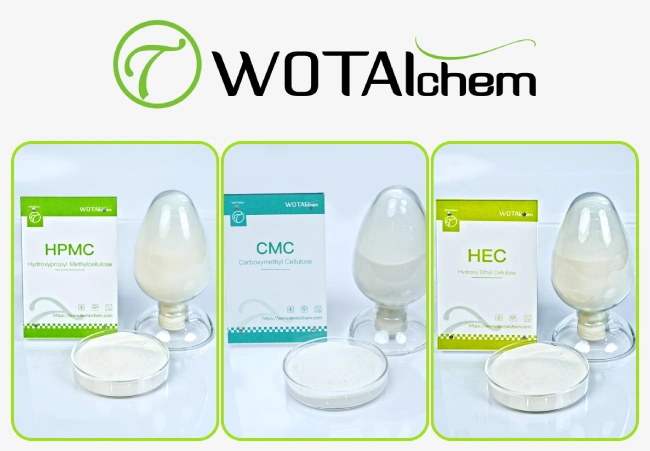
WOTAIchem is one of the largest cellulose ether manufacturers in China. We operate over three large-scale cellulose factories in Shandong. Our annual production capacity of cellulose ether exceeds 70,000 metric tons. Enabling us to provide customized cellulose ether products.
WOTAIchem™ main cellulose ether products:
– HPMC
– MHEC
– HEC
– CMC
– PAC
*Note: All products support OEM options. Delivery time takes 7-14 days.
We not only supply products but also offer comprehensive cellulose ether solutions. WOTAIchem gains investment from state-owned enterprises. We benefit from strong professional research capabilities. Our extensive lab covers more than 500㎡. It is well-equipped to help you develop the best formulations.
WOTAIchem’s dedicated team ensures that each client receives specialized attention. You can count on expert guidance and market analysis at every stage. Finally, helping you achieve better business growth.
Contact us today or send a free sample request now! Discover how our cellulose ether solutions can support your business needs.

Posted by Isabel leave words
Hi, I've been in this industry for five years. I hope you enjoyed my blog. Welcome to leave a comment down below.
Leave a Reply