
 Send Your Inquiry

What Happens If Concrete Is Too Wet?
Dry-mix concrete is made from a combination of coarse and fine aggregates (like gravel and sand) mixed with cement. When water is added, it reacts chemically with the cement (called a hydration reaction). This reaction binds all the materials together and create a strong, long-lasting building material – concrete.
However, if too much water is added during pouring, the concrete becomes thinner and more fluid. While this might make it easier to work with at first, it can cause several hidden problems.
What’s the Role of Water in Concrete Mix?
Water is essential in concrete because it starts the hydration reaction with cement that gives concrete its strength. When water is added, it reacts with cement to form a gel-like substance that sticks the aggregate particles together. This process is what makes the concrete strong and durable.

What Happens If You Put Too Much Water in Concrete?
While adding the right amount of water helps make concrete more workable and easier to pour, too much water is a bad thing.
The amount of water used directly affects the water cement ratio (the ratio of water to cement by weight). This ratio is the key factor determining the strength of concrete. When the water cement ratio is too high, excess free water increases the number of voids in the hardened cement paste. This weakens the bond between the cement and the aggregates. Thus the overall strength of the concrete will be significantly reduced.
In short, as the water cement ratio in concrete mix design increases, the strength of the concrete decreases. This is known as the water cement ratio rule — the higher the ratio, the lower the strength.

What happens if concrete is too wet? Too much water in concrete causes issues below:
▪️Segregation and Bleeding
Too much water in concrete mixture leads to segregation (separation of components) and bleeding (water rising to the surface). This weakens the concrete and makes it less durable after it hardens.
▪️Construction Defects
Too much water in concrete causes issues during pouring such as mold bulging or slurry leakage. This results in surface defects like honeycombing, rough patches, or even expose the steel reinforcement.
▪️Poor Mixing After Adding Water
If extra water is added but not mixed properly, it creates uneven spots in the concrete. These water pockets become weak points that reduce overall strength.
▪️Mix Design is Gets Messed Up
Adding water without recalculating changes the original mix design. This increases the water binder ratio (water divided by total binder mass, including cement and other cementitious materials), which lowers the concrete’s final strength.
▪️Floating Slurry and Lower Density
Too much water causes a thin layer of slurry to float on top. This makes the concrete less dense, reducing its waterproofing, crack resistance, and overall reliability — and could even lead to structural failure.
▪️More Internal Voids and Channels
Too much water leaves behind more tiny holes and channels in the concrete. These make it easier for water, air, and harmful chemicals to seep in, lowering the structure’s durability.
▪️Weak Surface Layer
The surface becomes loose and porous, lowering its resistance to wear and carbonation – a chemical process that weakens concrete over time.
For example, a truckload of 8 cubic yards (6.12 m³) of concrete is designed with a water-cement ratio of 0.48. If someone adds 35 gallons (about 132 liters) of water just before pouring, the ratio jumps to 0.56. As a result, the 28-day compressive strength drops from 4800 psi to 4150 psi — a loss of 650 psi! That’s a decrease of around 45 kg per square centimeter in load-bearing capacity. If this happens in a critical structural part, it will fail quality inspection and may even require repair or reconstruction.

How To Fix Too Much Water in Concrete?
1. If Concrete Has Not Yet Been Poured
🧱 Add Dry Materials to Rebalance the Mix
Add extra cement and aggregates (sand, gravel) according to the original mix ratio to keep the water-cement ratio unchanged. The added amounts should be calculated through testing, and the mix must be thoroughly blended to ensure uniformity.
🧱 Use a Water-Reducer (Admixture)
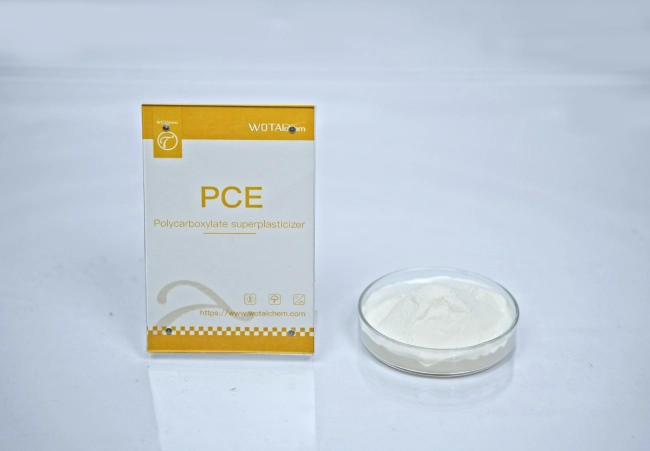
Add a high-performance water-reducing agent (such as a polycarboxylate-based superplasticizer). This improves workability without increasing water or cement content.
2. If Concrete Has Been Poured But Has Not Yet Set
🧱 Increase Vibration Time
Extend vibration time to help remove excess water and reduce voids. Avoid over-vibrating, which can cause aggregates to sink and weaken the structure.
🧱 Surface Water Removal
Use a sponge or vacuum dewatering machine to remove bleed water from the surface. This helps maintain surface strength and prevents defects.
🧱 Cover for Curing
Immediately cover the surface with plastic sheeting to reduce moisture evaporation differences and prevent plastic shrinkage cracks.

3. If Concrete Has Already Hardened
🧱 Strength Testing
Use tools like a rebound hammer or core sampling to check actual strength. If the strength is below design requirements, consider structural reinforcement (e.g., carbon fiber wrapping or enlarging sections).
🧱 Repair Defects
For visible defects caused by bleeding (e.g., sand streaks, voids), remove loose material and repair with high-strength mortar or epoxy resin.

4. Preventive Measures
🧱 Strict Water Control
Use batching plant-controlled mix designs and avoid random water addition on site. In hot weather, adjust workability using admixtures instead of adding water.
🧱 Slump Test Before Pouring
Always conduct a slump test before pouring. If the slump is outside the acceptable range, adjust the mix as per standards—never use unqualified concrete.

5. Key Reminders
❗Do NOT add cement directly: Dumping in cement to “fix” the mix changes the water-cement ratio and creates brittle spots.
❗Record All Adjustments: Any change in mix proportions must be carefully documented for quality control and traceability.
Final Note
The above methods can help minimize the impact of excess water. However, if the water-cement ratio exceeds 0.6, it’s strongly recommended to discard the batch to ensure structural safety.
How To Tell If Concrete Is Too Wet?
The consistency of concrete—whether it’s too wet or too dry—can mainly be judged by observing its flowability and conducting a slump test.
1. Observing Flowability
If the concrete flows too easily and the surface looks watery or overly slushy, it’s a sign that the mix is too wet.
While the mixer truck is rotating, if you hear loud clashing sounds from the aggregates (stones), it may indicate that the concrete is too watery and the aggregates are sinking to the bottom.

2. Concrete Slump Test
The slump test is one of the most reliable methods to determine if concrete is too wet. Here’s how it works:
1)Preparation
Gather the required tools: slump cone, measuring ruler, tamping rod, base plate, trowel, measuring cylinder, and the freshly mixed concrete.
2)Filling the Cone
Fill the slump cone in three equal layers, each about one-third the height of the cone.
3)Tamping
After placing each layer, tamp it 25 times vertically using the rod, evenly distributed across the surface.
4)Leveling the Top
After filling the third layer, use the trowel to level the top so that the concrete is flush with the top of the cone.
5)Lifting the Cone
Carefully lift the cone straight up in a smooth motion (not shaking), over 5–10 seconds.
6)Measuring the Slump
Measure the vertical difference between the height of the cone and the top of the slumped concrete using a steel ruler. This value is the slump.

Interpreting Slump Results
Slump values are generally classified into three categories, indicating different levels of workability and flowability for different construction needs:
High Slump (100 mm or more):
Indicates a very fluid mix. The concrete can flow easily under its own weight. This is common in large-volume pours and pumped concrete applications, where high flow is needed.
Low Slump (10 mm or less):
Indicates a very stiff or dry mix with almost no flowability. This kind of mix is typically used in applications requiring high strength and durability, such as roadways or hydraulic structures, where thorough compaction is possible.
How Much Water To Put in Concrete Mix?
The amount of water in concrete mix is determined by the designed water cement ratio—that is, the ratio of the weight of water to the weight of cement. Typical water cement ratio for normal concrete ranges from 0.4 to 0.6.
If the water cement ratio in concrete mix design is 0.45, and the cement content is 300 kg, then the required amount of water in concrete mix would be:
Water Amount = Water Cement Ratio × Cement Content = 0.45 × 300 = 135 kg of water
This total includes:
- Water needed for cement hydration
- Water needed to provide workability during mixing and placing
The target strength of the concrete also affects how much water you should use:
Higher-strength concrete → Lower water-cement ratio → Less water required
Lower-strength or highly workable concrete (e.g., for pumping or flowable applications) → Higher water-cement ratio → More water required
| Concrete Type | Water Cement Ratio Range | Explanation |
| Normal Concrete | 0.4 – 0.6 | Common range, balancing strength and workability |
| High – Strength Concrete | < 0.4 | A lower water cement ratio is required to ensure strength |
| Low – Strength or Flowing Concrete | > 0.6 | Good fluidity but lower strength |
In summary, the amount of water in a concrete mix depends on: The water-cement ratio (typically 0.4–0.6), the amount of cement and the required strength and workability.
Always stick to the designed water-cement ratio to ensure the concrete performs as expected in terms of strength, durability, and quality.
High-Performance Water Reducer Solution
To address the challenge of balancing concrete workability with strict water-cement ratio control, WOTAIchem has developed polycarboxylate-based high-performance water reducer and naphthalene superplasticizer, offering a professional and effective solution.
This product cuts water usage in concrete by 15–30%, improves flow, meets slump requirements, and keeps the water-cement ratio stable.
Superplasticizer for Concrete Key Advantages:
✅ Strength Assurance
Precisely controls the water-cement ratio to prevent strength loss, improving 28-day compressive strength by 10%–20%.
✅ Improved Durability
Reduces porosity to enhance water resistance, carbonation resistance, and extend the structure’s service life.
✅ Eco-Friendly & Cost-Effective
Saves on cement usage, lowers carbon emissions, and reduces overall costs by 8%–12%.

Application Scenarios
This solution is ideal for projects requiring high workability, such as:
Pumped concrete
Mass pours
High-rise buildings
It has been successfully applied in large-scale construction projects across Russia, Greece, Mauritius, India, and more, with a 100% passing rate on strength tests and excellent client feedback.
Get in Touch with WOTAIchem
Need custom mix designs or technical support? Contact us today, and our technical team will provide you full guidance to ensure both concrete quality and construction efficiency.

Posted by Isabel leave words
Hi, I've been in this industry for five years. I hope you enjoyed my blog. Welcome to leave a comment down below.
Leave a Reply