
 Send Your Inquiry
Concrete Honeycomb: Not Made by Bees, but a Common Structural Problem
Have you ever seen something like this concrete honeycomb on the roadside? It’s not a beehive, nor a wonder of nature — it’s actually a dangerous scar in construction.

In nature, a honeycomb stands for precision and strength. But in the world of concrete, these hollow gaps mean weakness and potential danger. They don’t just spoil the appearance — they signal deeper quality issues. Over time, they quietly reduce structural strength and shorten the life of a building.
In this article, we’ll explore what causes honeycombing in concrete, how it affects your structure, and how to identify and fix this common construction defect.
What Is Honeycombing in Concrete?
Honeycombing in concrete is a common local defect found in concrete structures. It refers to voids formed between aggregates, giving the structure surface a honeycomb-like appearance.
In simple terms, it occurs when the cement paste doesn’t fully fill the spaces between coarse aggregates. As a result, the concrete surface lacks mortar, exposing the stones with a depth greater than 5 mm — but usually still within the protective cover of the reinforcement.
Visually, these areas contain too many coarse aggregates and very little mortar, leaving many small gaps between the stones — resembling a honeycomb pattern. This defect not only affects the appearance of the structure but, more importantly, weakens its mechanical strength and durability.
Types of Honeycomb in Concrete
Concrete honeycomb can appear in several forms, depending on the degree and cause of the defect. The most common types include:
1. Minor Concrete Honeycomb
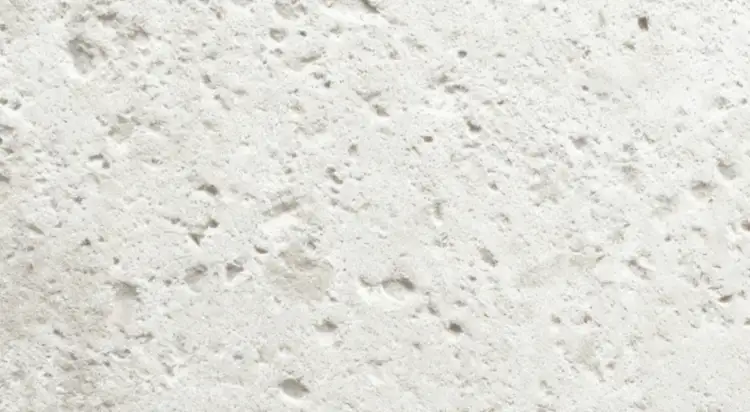
This type looks like tiny pits or pores on the concrete surface – similar to orange peel texture. The depth is very shallow, and coarse aggregates are either not exposed or only slightly visible. Such honeycombing usually occurs when:
▪️The formwork absorbs too much water,
▪️The vibration time is too short, or
▪️The concrete mix ratio is improper (for example, not enough mortar)
In this case, the concrete surface is not dense enough, but the structural impact is minimal.
2. Moderate Concrete Honeycomb (Typical Bleeding Segregation Honeycombing of Concrete)

This larger concrete honeycomb is commonly caused by bleeding segregation honeycombing of concrete, where the cement paste and aggregates separate during pouring. The coarse aggregates gather together, leaving almost no cement paste between them – it looks like a pile of dry stones.
These irregular voids usually appear on the sides or sloping surfaces of concrete members. Such honeycombing weakens the bond and reduces structural integrity.
3. Deep Concrete Honeycomb

This is the most serious type. The surface hole may look small, but when probed, a deep hollow can be found inside. Coarse aggregates are clearly visible, and sometimes steel reinforcement is exposed.
This typically happens due to segregation, leakage of cement paste, or incomplete vibration during placement. If not repaired in time, it can greatly reduce the durability and safety of the structure.
Effect of Honeycomb in Concrete
A sound concrete structure is like a solid rock — dense, strong, and reliable. But when honeycombing appears, the structure becomes like a piece of wood eaten by insects — full of hidden weaknesses. Different types of honeycombing affect concrete in various ways, depending on their severity.
1. Impact on Structural Strength
The most critical effect of honeycombing is the reduction of load-bearing capacity, which directly concerns structural safety.
In severe or deep bleeding segregation honeycombing of concrete, the internal cavities act as weak zones. Under stress, these areas become stress concentration points, where cracks can start and spread, leading to partial or even structural failure.
2. Impact on Durability
Honeycombing also damages the compactness of concrete, allowing harmful substances — like water, air, and chemicals — to penetrate through the cavities. This intrusion causes further deterioration, including:
▪️Corrosion of reinforcement,
▪️Reduced resistance to water and frost, and
▪️Loss of long-term durability.
Over time, these effects silently shorten the service life of the entire structure.
3. Impact on Appearance and Cost
Minor concrete honeycomb may not directly threaten safety, but it still creates visible defects on the surface. The rough, uneven texture and clusters of holes reduce the aesthetic quality of concrete and often require extra repair work — increasing labor and material costs.
How Much Honeycombing Is Allowed In Concrete?
There is no fixed number or standard limit for acceptable honeycombing.
Concrete inspection is based on performance and serviceability, not on counting visible defects. In proper construction standards, no honeycombing that affects structural strength or usability is allowed.
But does that mean small, non-structural honeycombs can be ignored? No! Even surface-level honeycombing visible to the naked eye is considered a defect. For concrete structures, the acceptable value for visible honeycombing is zero — every honeycomb, big or small, must be treated and repaired properly.
Causes of Honeycomb in Concrete
The formation of concrete honeycomb is mainly due to two types of problems — one occurs during concrete preparation, and the other during concrete pouring.
1. Problems During Concrete Preparation
(1) Improper Concrete Mix Design
When the concrete mix proportions are not followed correctly — for example, too little mortar and too many aggregates — the balance between components is lost.
Common issues include:
▪️Low sand ratio: Too little sand means insufficient mortar to fill the gaps between aggregates.
▪️Oversized coarse aggregates: Large stones create big voids that the mortar cannot fully fill.
(2) Lack of Proper Concrete Admixtures
▪️Poor workability: Without suitable admixtures, such as superplasticizer. Concrete is hard to compact properly, leading to voids.
▪️Short initial setting time: If concrete sets too quickly, it starts hardening before proper vibration, resulting in poor compaction.
(3) Improper Mixing
▪️Insufficient mixing: Components are not evenly blended, creating non-uniform and porous concrete.
▪️Over-mixing: Excessive mixing can cause segregation between mortar and aggregates, leading to bleeding segregation honeycombing of concrete.
2. Problems During Concrete Pouring
(1) Poor Handling During Placement
Dropping concrete too quickly or unevenly can create air pockets and voids in the structure.
(2) Inadequate Vibration
If the concrete is not properly vibrated, air bubbles and trapped voids remain inside, forming honeycomb cavities after hardening. Common vibration problems include:
▪️Vibrator too small — cannot compact effectively.
▪️Low vibration frequency — not enough energy to settle the concrete.
▪️Vibration time too short — air not fully expelled.
▪️Vibration spacing too wide — leaves unvibrated zones.
▪️Shallow insertion depth — bottom layers not compacted.
(3) Formwork Issues
▪️Leaky joints: Gaps in formwork allow cement paste to leak out, causing hollow areas.
▪️Uneven or dirty surface: Poor surface quality prevents proper bonding and compaction.
(4) Design-Related Problems
▪️Overcrowded reinforcement: Concrete cannot fill the narrow gaps between dense steel bars.
▪️Tight spaces: Vibrators cannot reach narrow internal areas.
▪️Conflicting embedded parts: Poor internal layout leaves unfilled spaces.
▪️Overlapping bars: Create dense networks that block concrete flow.
(5) Improper Pouring Technique
▪️Excessive free fall: Dropping concrete from high levels causes segregation and honeycombing.
▪️Long flow path in formwork: Concrete separates as it travels too far.
▪️Large drop height: Increases segregation risk.
▪️Visible segregation: When stones and mortar separate, honeycombing appears.
In real construction, when concrete honeycomb occurs, both material quality and construction practices must be inspected.
Only by identifying whether the issue comes from the mix design, the site operation, or both — can the problem be properly corrected and responsibility assigned.
Honeycomb Concrete Repair
Treatment of Small Concrete Honeycombs
For small-scale honeycombs, the first step is to thoroughly wash the area with water to remove surface impurities and loose particles.
Next, smooth the area using a high-strength repair mortar. Use a cement-sand mortar in a ratio of 1:2 or 1:2.5, such as epoxy mortar, acrylic mortar, or high-strength polymer mortar. Ensure the repair material is firmly pressed and compacted against the original concrete surface to achieve effective restoration.
Treatment of Larger Concrete Honeycombs
For larger honeycombs, begin by removing loose stones and protruding aggregates to create a stable base for filling.
It is recommended to use pneumatic spraying to efficiently fill the honeycombs with specially prepared mortar and fine concrete mixtures. During this process, the honeycomb opening should be cleaned or chipped to form a slightly outward-leaning shape, allowing the repair material to fit securely.
If manual filling is used, the honeycomb opening should be cleaned or chipped into a relatively flat shape, and the filling depth should be at least 25 mm to ensure sufficient filling and structural stability.
Treatment of Deep Concrete Honeycombs
For deep honeycombs, it may be necessary to install grout pipes and vent pipes inside the honeycomb for more complex repair operations.
After applying mortar or casting concrete on the surface of the honeycomb for sealing, perform grouting to further enhance the density of the repair material and the overall structural performance.
Additional Key Points for Concrete Honeycomb Treatment
The concrete surface around the honeycomb should be roughened thoroughly to improve bonding strength between the old and new concrete, ensuring long-lasting repair.
Completely remove dust and debris from the honeycomb and surrounding areas to ensure the repair material adheres firmly to the original concrete, enhancing repair quality.
Choose filling materials that match the color of the new concrete to maintain a uniform appearance and overall aesthetics.
After filling, carry out proper curing to ensure the new concrete develops sufficient strength and durability, achieving the desired repair effect.
How to Prevent Honeycomb in Concrete
To effectively prevent honeycombing in concrete, a series of practical measures can be taken at different stages of construction. Here, we focus on both the concrete preparation and the pouring processes.
Concrete Preparation Process
1. Strictly Control Concrete Mix
Accurately measure all components according to the mix design, including cement, sand, aggregates, water, and additives. Carefully control the water-cement ratio, slump, and mixing time. Proper proportioning ensures high-strength, dense, and workable concrete.
2. Use Necessary Concrete Additives
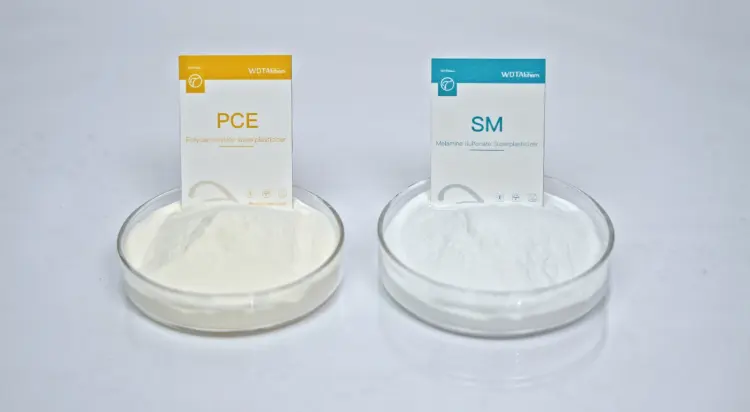
The most effective additive to prevent honeycombing is a water-reducing agent. It helps address poor workability, incomplete compaction, and segregation.
WOTAIchem’s water reducers include polycarboxylate, naphthalene-based, and SM types. Their benefits include:
▪️Reducing Water-Cement Ratio: Maintain the same slump while using less water, leading to stronger and denser concrete.
▪️Improving Workability: Make concrete softer and easier to flow, filling all gaps around formwork and reinforcement, reducing honeycomb risks caused by tight reinforcement or narrow spaces.
▪️Reducing Segregation: Enhance concrete cohesion to prevent aggregate and mortar separation, especially useful when pouring from height or at high speed.
Additionally, concrete defoamers can be used as auxiliary additives to remove trapped air from poorly compacted concrete, further reducing the chance of honeycombing.
3. Ensure Thorough Mixing
Proper mixing is crucial. Uniform mixing ensures consistent workability and prevents honeycombing due to poor compaction. Adjust mixing time and speed to fully blend mortar and aggregates, improving overall concrete quality.
Concrete Pouring Process
1. Control Pouring Height
When pouring from a height above 2 meters, use chutes or slides to reduce concrete segregation.
2. Layered Pouring and Vibrating
Control vibration at each point for 20–30 seconds, with additional time if needed, to ensure complete compaction. Layered pouring allows concrete to densify step by step, effectively preventing honeycombing.
3. Seal Formwork Gaps
Before pouring, inspect the formwork carefully. Repair any large gaps to ensure tight joints.
4. Reinforcement Layout and Aggregate Size
Plan reinforcement to avoid overly dense placement. Select appropriate aggregate size to ensure concrete can fully fill the spaces.
5. Proper Concrete Curing
After initial setting, avoid exposing concrete to direct sunlight too early. Use coverings such as straw mats and keep the surface moist by sprinkling water. Maintain curing for 14–28 days to ensure strength and durability.
Knowing what honeycombing is and how to prevent it is just the first step. By controlling mix, additives, pouring, and curing, you can achieve smooth, strong concrete and avoid common defects, making your construction work more reliable.

Posted by Isabel leave words
Hi, I've been in this industry for five years. I hope you enjoyed my blog. Welcome to leave a comment down below.
Great article Isabel and very informative. Thank you.
thanks to God someone enlightened this topic in informative way
Leave a Reply